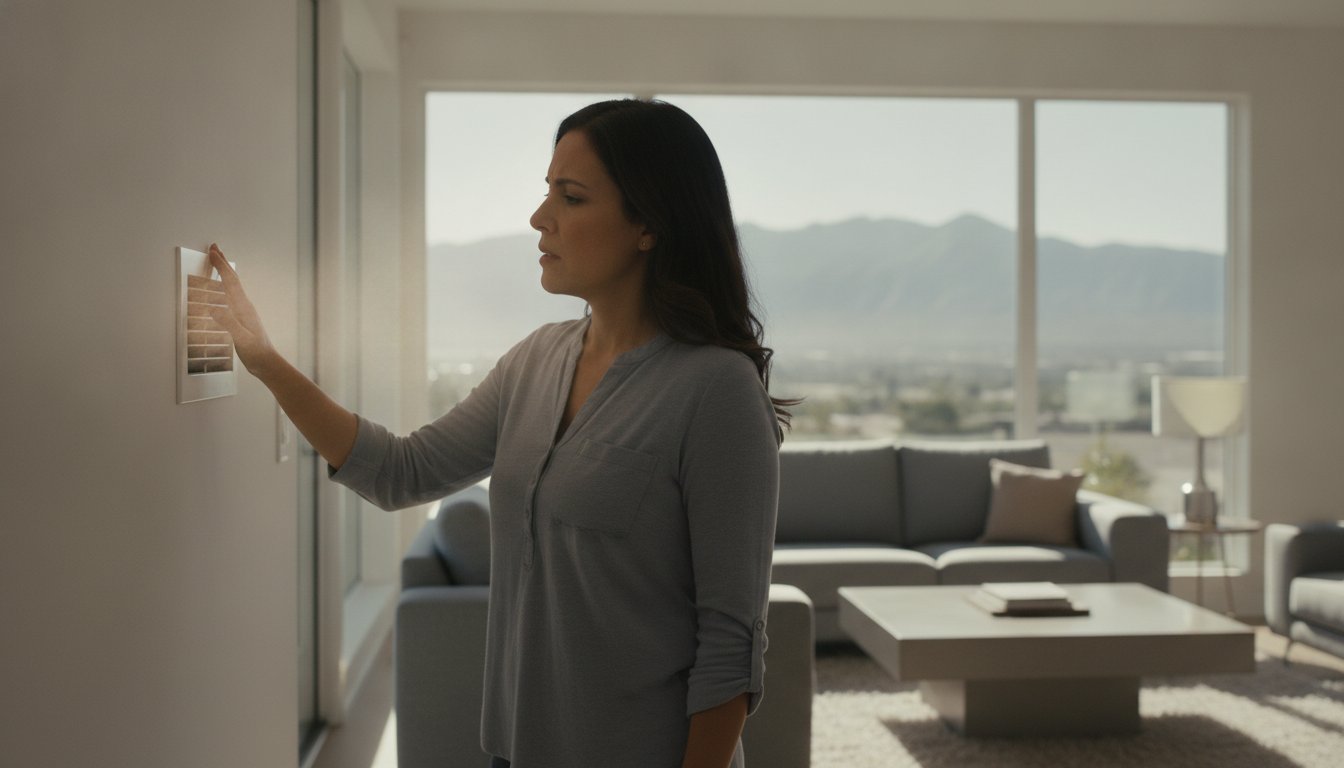
When your home should be a sanctuary from the Inland Empire heat, feeling a breeze that's more like a hair dryer than an air conditioner is an immediate cause for concern. If you've discovered your AC blowing warm air Redlands summers can make that realization feel like an emergency. It's natural to worry about high repair costs or get lost in technical jargon when you just want your living room to be cool again. You're likely looking for a straightforward answer that doesn't involve a high pressure sales pitch.
This article will help you discover why your air conditioner has stopped cooling and provide the specific troubleshooting steps to restore comfort to your home. We'll guide you through identifying simple DIY fixes, such as checking for clogged filters, and explain how recent changes like the 2025 refrigerant regulations might affect older units. You'll learn how to spot the difference between a minor adjustment and a serious mechanical issue, ensuring you know exactly when to call a professional to prevent a total system failure.
Key Takeaways
- Troubleshoot simple thermostat and fan settings to see if your cooling issue can be resolved without a professional service call.
- Identify the signs of a failed capacitor, the component responsible for starting your outdoor unit, to better understand potential mechanical repairs.
- Learn why your AC blowing warm air Redlands unit shouldn't just be "topped off" with refrigerant and how DIY kits can lead to permanent compressor damage.
- Explore how local environmental factors like Santa Ana winds and high desert temperatures impact your system's performance and maintenance needs.
- Recognize when professional diagnostics are necessary to ensure your system meets California's strict efficiency and refrigerant standards.
Immediate Troubleshooting: Is Your AC Actually Broken?
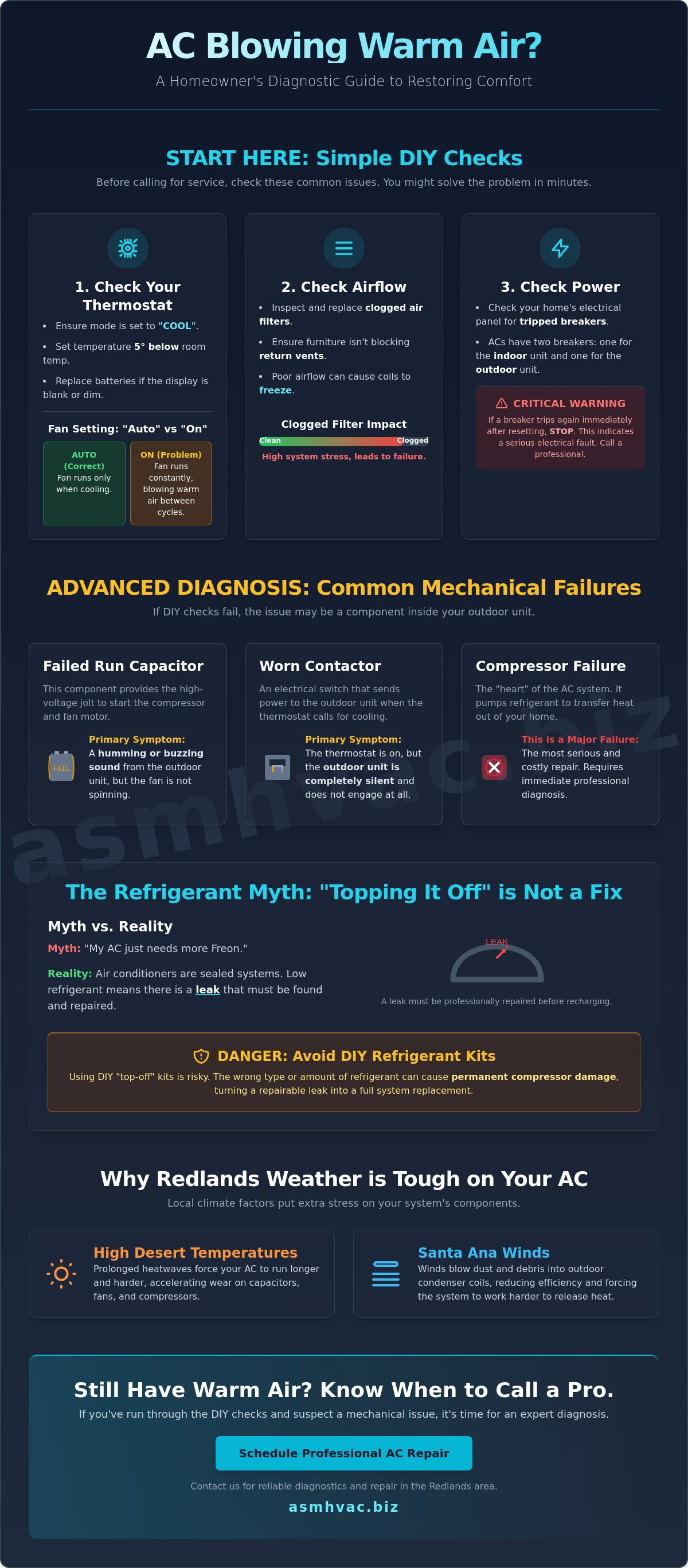
Before you assume a major component has failed, it's helpful to rule out simple operational errors. If you find your AC blowing warm air Redlands homes often experience this during the first major heatwave of the season. Sometimes, the system isn't actually broken; it's simply reacting to a setting or a minor maintenance oversight. One of the most common culprits is the "Fan On" setting. While it might seem like a good idea to keep air circulating, setting your thermostat to "On" instead of "Auto" means the indoor blower runs continuously. When the outdoor compressor cycles off, the fan continues to push uncooled, room-temperature air through your vents, leading to that frustrating warm breeze.
The Thermostat Reality Check
Start with the basics. Ensure the thermostat is set to "Cool" rather than "Heat" or "Fan". It sounds simple, but accidental mode changes happen easily during cleaning or when someone else in the house adjusts the interface. Set the target temperature at least five degrees below the current room temperature to trigger a cooling cycle. If the display is blank or shows a low battery icon, replace the batteries immediately. A weak battery can cause the thermostat to lose its connection with the HVAC unit, preventing the cooling signal from ever reaching the outdoor condenser. This often results in the fan running without any actual cooling taking place.
Airflow Obstructions and Filter Health
A neglected air filter is a leading cause of system stress. When a filter is thick with dust, it restricts the volume of air passing over the evaporator coil. To understand how air conditioning works, you must realize that the system doesn't create cold; it removes heat. Restricted airflow causes system pressure imbalances by 2026, which can lead to the evaporator coil dropping below freezing. This ice buildup physically blocks air passage, eventually resulting in the AC blowing warm air Redlands residents notice when the cooling cycle fails completely. Check your return vents as well. If furniture or heavy drapes block these intakes, the system will struggle to breathe.
If the settings and filters look correct, the issue might be electrical. Air conditioners use two separate circuits: one for the indoor air handler and one for the outdoor condenser. Check your home's main electrical panel for a tripped breaker. If the outdoor switch has moved to the "off" or "neutral" position, the indoor fan will still blow air, but it won't be cooled because the compressor is powered down. If you reset the breaker and it trips again immediately, stop. This indicates a serious electrical fault that requires a professional diagnostic to prevent further damage.
Mechanical Failures: Why the Cooling Cycle Stops
If your thermostat settings are correct and your filters are clean, but you still have your AC blowing warm air Redlands heat can quickly reveal a mechanical breakdown. The most frequent culprit in our region is the run capacitor. Think of the capacitor as a large battery that provides the high-voltage jolt needed to start the outdoor fan and compressor. Over time, high temperatures and electrical stress cause these components to bulge or leak. If you hear a persistent humming sound coming from your outdoor unit but the fan isn't spinning, a failed capacitor is the likely reason. Replacing this part early prevents the motor from overheating and failing prematurely.
Another common point of failure is the contactor. This is an electrical switch that physically closes to send power to the system. After years of use, the silver coating on the contact points can wear away, a process known as pitting. This creates electrical resistance or prevents the switch from closing entirely. If the contactor fails, the outdoor unit won't engage at all. While capacitors and contactors are relatively straightforward fixes, a failed compressor is a more serious situation. As the heart of the refrigeration cycle, the compressor is responsible for pumping refrigerant. If it seizes or suffers an internal mechanical failure, the system can no longer remove heat from your home.
According to the U.S. Department of Energy's guide on Common Air Conditioner Problems, electrical control failure is a leading reason for cooling loss. This is especially true when a system is oversized or cycles on and off too frequently, putting undue stress on the starting components.
The Outdoor Condenser Unit
Take a walk outside while the system is running to inspect the condenser. The fan on top of the unit should be spinning rapidly, and you should feel warm air being exhausted from the top. If the unit is silent despite the thermostat calling for cooling, an electrical component has likely failed. Check the exterior for "cottonwood" seeds, dust, or dry leaves. These Inland Empire environmental factors can coat the condenser fins, acting as an insulator that prevents heat from escaping. This causes the system to run longer and hotter, eventually leading to a thermal overload shutdown.
Blower Motor and Air Distribution
The indoor blower motor is responsible for moving air through your ductwork. If this motor begins to fail, it may spin too slowly to move enough air across the cooling coils. You might hear screeching or grinding noises, which often signal that the motor bearings are worn out. Beyond the motor itself, leaks in your ductwork can pull hot attic air into the system, neutralizing the cooling effect before the air reaches your vents. If you suspect a mechanical issue is behind your AC blowing warm air Redlands, a professional inspection can identify the exact fault before it leads to more expensive damage.
The Refrigerant Myth: Why "Topping It Off" Isn’t a Fix
Many homeowners assume their air conditioner uses up refrigerant like a car consumes gasoline. This is a common misconception. Your HVAC system is a sealed, closed-loop circuit; the refrigerant simply cycles between liquid and gas to move heat. If the levels are low, it's because there's a physical leak in the copper lines or the coils. Simply "topping it off" without fixing the hole is like trying to fill a bucket with a hole in the bottom. It wastes money and allows chemicals to escape into the environment, which is why environmental regulations are so strict regarding these repairs.
Using DIY refrigerant kits can be a costly mistake. These kits often lack the precision gauges needed to measure subcooling or superheat, making it incredibly easy to overcharge the system. This excess pressure can lead to liquid refrigerant entering the compressor, causing catastrophic mechanical failure. For a deeper look at how these chemicals function within your unit, you can consult this AC Refrigerant Guide. When you're dealing with an AC blowing warm air Redlands technicians must follow specific federal guidelines to ensure the system is handled safely.
Under the federal AIM Act regulations effective January 1, 2026, systems containing 15 pounds or more of HFC refrigerants are subject to expanded leak repair and verification requirements. This is a significant shift from previous standards. Because of these complexities, having a NATE-certified technician is essential. They have the specialized training to find microscopic leaks and ensure your system remains compliant with both California and federal law while protecting your home's comfort. Dealing with an AC blowing warm air Redlands heat makes even more difficult requires a professional who understands these evolving environmental standards.
Identifying a Refrigerant Leak
Identifying a leak isn't always about seeing a puddle. Refrigerant is often mixed with oil for lubrication, so look for dark, oily stains on the copper lines or near the base of the evaporator coil. You might also hear a distinct hissing or bubbling sound from the unit while it's running. If your system runs constantly but the air at the vents feels lukewarm, the low pressure is likely causing the evaporator coil to ice over, which physically blocks heat transfer and stops the cooling cycle entirely.
Repair vs. Recharge
Technicians use a "Search and Seal" process involving electronic leak detectors or ultraviolet dyes to find microscopic cracks in the lines. Because of the R-22 phase-out and rising maintenance costs, R-22 systems are often replaced rather than repaired in 2026 to ensure long-term efficiency and regulatory compliance. If your system is over 15 years old, the cost of a major coil repair often outweighs the long-term benefits of investing in a new, high-efficiency system that meets current Title 24 standards.
Redlands Climate Factors: How Local Weather Stresses Your AC
Redlands sits in a unique geographic position where the Inland Empire's heat meets high-desert environmental stressors. Most air conditioning systems are engineered based on a "Design Temperature," which is typically around 95 degrees Fahrenheit for our region. When a Redlands summer pushes the thermometer to 105 or 110 degrees, your system is operating well beyond its standard efficiency rating. This extreme heat doesn't always indicate a broken part, but it does mean your unit is under immense pressure to move heat out of your home. If you notice your AC blowing warm air Redlands weather is likely testing the limits of your system's thermal capacity. Understanding how these local conditions impact your hardware can help you avoid a total breakdown when you need cooling the most.
The geography of our area also brings specific challenges that coastal homeowners don't face. We're surrounded by open fields and foothills that funnel wind and silt directly into residential neighborhoods. This makes a regular AC tune up Redlands homeowners can rely on essential before the July and August heat peaks. Without preventative care, the local environment can compromise even the most expensive HVAC systems. Taking a proactive approach is the best way to ensure your family stays comfortable regardless of the temperature outside.
Dust and Debris from the Santa Anas
Santa Ana winds carry a fine, abrasive dust that is particularly troublesome for outdoor condenser units. As the fan pulls air through the condenser fins, this dust accumulates and acts as a layer of insulation. This prevents the refrigerant from releasing heat effectively, forcing the compressor to work harder and run longer. While a gentle rinse with a garden hose can remove surface-level dirt, it often isn't enough to clear the deep-seated grime that builds up over a season. For homes located near open fields or construction sites, this buildup happens significantly faster, requiring more frequent maintenance to prevent system suffocation.
Thermal Overload in 100-Degree Weather
When outdoor temperatures remain in the triple digits, the compressor can become hot enough to trigger a high-heat safety switch. This thermal overload protection is a built-in defense mechanism that shuts the compressor down to prevent it from melting its internal windings. If your AC blowing warm air Redlands residents experience during a heatwave is caused by this overload, the system needs time to cool down before it can be safely restarted. While some homeowners try to provide "shade" for their unit, it's vital not to restrict the airflow around the condenser. Similarly, while sprinkling the unit with water might provide a temporary cooling effect, the minerals in our local water can leave behind a hard scale that permanently reduces heat transfer. If your system is struggling to keep pace with the summer sun, it's time to schedule a professional inspection to ensure your cooling capacity is fully restored.
When to Call Air Services Mechanical for AC Repair in Redlands
When your troubleshooting efforts don't yield results, it's time to rely on professional expertise to protect your home and your investment. If you've discovered your AC blowing warm air Redlands summers make it clear that you can't wait days for a solution. We understand the stress that comes with a failing HVAC system, which is why we focus on providing straightforward, reliable service without the pressure of long-term contracts or hidden fees—a commitment shared by experienced family-owned operators like Peninsula Air Conditioning (PenAir). Our goal is to restore your comfort quickly and transparently, ensuring you understand exactly what's needed to get your system back in peak condition.
The difference between a quick fix and a lasting repair often comes down to the tools and training used during the diagnostic phase. We utilize high-precision digital gauges to find the exact pressure fault within your cooling loop, rather than relying on guesswork. Our team consists of NATE-certified technicians who bring over 20 years of local experience to every driveway. This level of certification is vital because it ensures your technician understands the complex relationship between airflow, electrical components, and the latest refrigerant regulations. Because Inland Empire nights often stay in the 80s, we provide 24/7 emergency service to ensure your family isn't left in the heat during a midnight system failure.
Our Professional Repair Process
A professional repair is about more than just swapping a part. Our technicians perform a comprehensive system health check that goes beyond the immediate symptom of warm air. We conduct a thorough safety verification of all electrical connections and inspect refrigerant levels to ensure they meet manufacturer specifications. Before we consider the job finished, we perform final testing to verify the "delta-T," which is the specific temperature drop between your return and supply vents. This precise measurement confirms that your system is actually removing heat at the rate it was designed to, providing you with peace of mind that the repair is complete.
To see how these rigorous professional standards are applied by long-standing experts like Ray Brown Air and Heat, you can explore HVAC Installation & Repair and learn about the comprehensive approach taken by family-owned specialists with over 60 years of experience.
Scheduling Your Redlands AC Service
Booking a diagnostic visit with our EPA-certified team is simple and efficient. We're proud to be a dependable local presence, serving homeowners in Redlands, Yucaipa, Highland, and throughout the wider Inland Empire. Whether you're dealing with a minor electrical fault or a complex refrigerant issue, we have the specialized training to handle it safely and correctly. Don't suffer in the heat; Contact Air Services Mechanical for expert AC repair in Redlands and let our seasoned veterans restore the quiet, reliable cooling your home deserves.
Restore Your Home's Cooling Comfort Today
Dealing with an air conditioner that has stopped performing is a stressful experience, especially during the peak of an Inland Empire summer. By understanding the common causes, from simple thermostat settings to complex mechanical failures, you're now better equipped to handle your home's maintenance. Remember that while basic troubleshooting can resolve minor issues, dealing with refrigerant leaks or electrical faults requires the precision and safety of professional diagnostics. If you're currently facing an AC blowing warm air Redlands heat is too intense to ignore. Acting early prevents small part failures from turning into expensive system replacements.
Our team is here to provide the steady guidance and technical expertise you need to stay cool. With NATE-Certified technicians and over 20 years of local experience, we offer straightforward solutions that prioritize your peace of mind and long-term results. We're available for 24/7 emergency service to ensure you never have to suffer through a sweltering night. Schedule Your Redlands AC Repair with Air Services Mechanical to get your system back in peak condition. You deserve a home that remains a cool sanctuary regardless of the temperature outside.
Frequently Asked Questions
Should I turn off my AC if it is blowing warm air?
Yes, you should turn the system off immediately. When an air conditioner blows warm air, it often indicates that the compressor is struggling or the coils are frozen. Continuing to run the unit can lead to severe mechanical strain or a total compressor burnout, which is a much more expensive repair than addressing the initial fault.
How much does it cost to fix an AC blowing warm air in Redlands?
The cost depends entirely on the underlying cause. Minor issues like a failed capacitor or a clogged filter are relatively inexpensive to resolve. More significant problems, such as a refrigerant leak or compressor failure, require more labor and specialized parts. We provide clear, upfront information after a professional diagnostic so you can make an informed decision without any surprises.
Why is my AC running but not cooling the house?
This situation usually occurs when the indoor fan is working but the outdoor unit has failed to engage. If you have an AC blowing warm air Redlands heat can cause the outdoor condenser to trip a breaker or suffer from a failed start component. Without the outdoor unit running the refrigeration cycle, the system is simply circulating room-temperature air through your home.
Can a dirty air filter really cause warm air?
A clogged air filter is one of the most common reasons for cooling loss. It restricts the airflow needed to keep the evaporator coil at the correct temperature. When air can't pass through, the coil drops below freezing and develops a layer of ice. This ice acts as an insulator, preventing the system from absorbing heat and resulting in warm air at the vents.
How do I know if my AC compressor is bad?
Common signs of a failing compressor include loud growling or clunking noises when the system starts. You might also notice the outdoor unit vibrating more than usual or the circuit breaker tripping every time the cooling cycle begins. If the fan is spinning but you don't hear the distinct hum of the compressor, it may have seized or suffered an internal electrical fault.
Is it worth repairing a 15-year-old AC unit blowing warm air?
It depends on the specific part that failed. Replacing a simple electrical switch is often worth it to extend the life of the system for a few more seasons. However, for major failures like a leaking coil or a dead compressor, we generally recommend replacement. Modern units are significantly more efficient and meet the 2026 Title 24 standards, providing better long-term value.
How long does a typical AC repair take in the Inland Empire?
Most standard repairs, such as replacing a capacitor or a contactor, are completed in about an hour. If the technician needs to perform a deep coil cleaning or conduct a formal leak search, the process can take three to five hours. We carry most common parts on our service vehicles to ensure we can get your home cool again in a single visit whenever possible.
Can I add refrigerant to my AC unit myself?
You should never attempt to add refrigerant to your own system. AC units are sealed loops that do not consume gas; a low level always indicates a leak that must be repaired first. Furthermore, California law and federal EPA regulations require certified professionals to handle these chemicals to prevent environmental damage and ensure the system isn't accidentally overcharged, which can destroy the compressor.


