

A flame sensor doesn’t have one fixed cleaning interval for every furnace. For furnace flame sensor cleaning in Redlands, the need depends on the sensor’s condition and whether the furnace is reliably detecting a flame. A technician can inspect it during furnace maintenance and clean it if buildup or operating issues call for it.
It’s reasonable to want a clear answer before arranging service. This guide explains what affects cleaning frequency, how a technician cleans the sensor, and what checks confirm that the furnace is operating properly afterward. You’ll also learn when a recurring problem may need diagnosis beyond cleaning, so you can understand the next step.
Key Takeaways
- Learn which signs and operating conditions can help determine when sensor cleaning is due.
- See what a technician examines before cleaning and how furnace operation is checked afterward.
- Understand how the sensor helps the furnace detect a burner flame and why that matters.
- Recognize when repeated shutdowns may call for furnace repair rather than cleaning alone.
Cleaning frequency recommendations
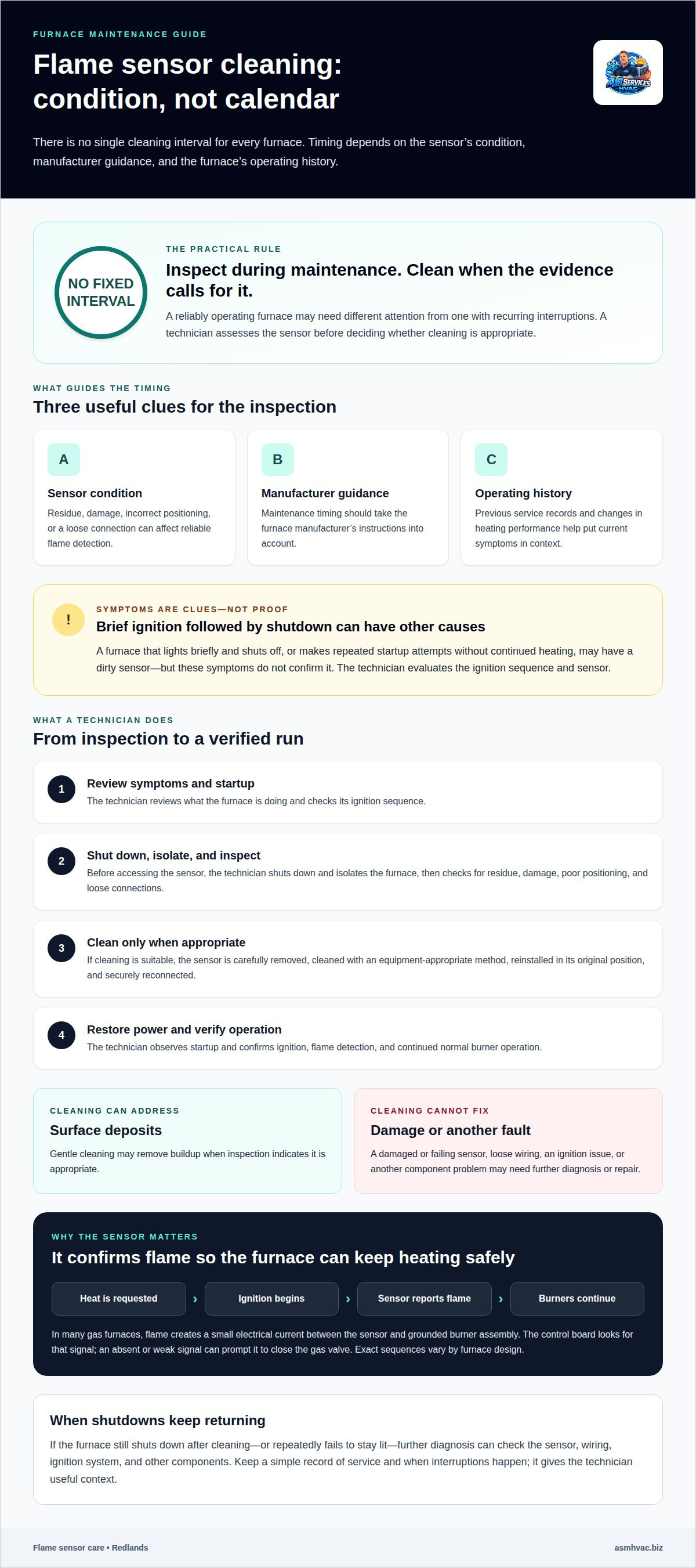
There’s no fixed interval that suits every furnace. For furnace flame sensor cleaning in Redlands, the timing depends on the sensor’s condition, the manufacturer’s maintenance guidance, and the furnace’s operating history. A technician can inspect the sensor during scheduled maintenance and clean it if deposits or symptoms indicate a need. A furnace that starts and runs reliably may need different attention from one with recurring interruptions.
Redlands grew between the 2010 and 2020 censuses. According to the U.S. Census Bureau, the city had 68,747 residents in 2010 and 73,168 in 2020. Those figures describe the community, not a cleaning schedule. For an individual home, the useful clues are previous service records, changes in heating performance, and the sensor’s condition during inspection.
Signs of a dirty sensor can include a furnace that lights briefly and then shuts off, or repeated startup attempts without continued heating. These symptoms can have other causes, so they don’t confirm that the sensor is dirty. A technician evaluates the ignition sequence and sensor before deciding whether cleaning is appropriate.
Warranty terms depend on the furnace manufacturer’s written instructions. Permit requirements depend on the work being done, since cleaning differs from equipment changes or other repairs. The technician can explain which type of work applies.
For a furnace flame sensor cleaning appointment in Redlands, describe when shutdowns occur and whether they continue after restarting. This information helps focus the inspection. Furnace repair is appropriate when symptoms persist or cleaning doesn’t resolve the issue.
Cleaning process and verification
A technician reviews the furnace’s symptoms and checks its ignition sequence. Before accessing the sensor, they shut down and isolate the furnace. They inspect the sensor for residue, damage, incorrect positioning, and loose connections. This assessment helps distinguish surface buildup from a fault that cleaning won’t resolve.
If cleaning is appropriate, the technician carefully removes the sensor and cleans its sensing surface using a method suited to the equipment. The part needs gentle handling, since rough contact or unsuitable materials can damage it. The technician then reinstalls it in its original position and checks that the connection is secure. Cleaning removes deposits, but it won’t restore a damaged or failing sensor. Replacement involves installing a suitable new part when inspection or testing shows that cleaning isn’t enough.
Incorrect cleaning can leave residue, damage the sensing surface, or shift the sensor out of position. A loose connection or an underlying ignition problem can also leave the original shutdown symptoms unresolved. That’s why the work should be followed by a full operational check, rather than treated as the repair by itself.
After reassembly, the technician restores power and observes the furnace startup. They confirm that ignition occurs, the sensor detects the flame, and the burners continue operating normally. If the furnace still shuts down, further diagnosis can determine whether the sensor, wiring, ignition system, or another component needs attention.
For persistent shutdowns, a professional furnace repair assessment can help identify the cause and determine the next step.
How does a furnace flame sensor work?
A furnace flame sensor is a safety component positioned beside a burner. Its metal rod extends into the flame after ignition begins. The sensor doesn’t ignite gas or regulate room temperature. Instead, it helps the furnace’s control board determine whether a burner flame is present, allowing the heating sequence to continue.
In many gas furnaces, the flame creates a small electrical current between the sensor and the grounded burner assembly. This process is called flame rectification. After the burner lights, the control board looks for the resulting signal. A steady signal indicates flame detection, while an absent or weak signal can prompt the board to close the gas valve. Exact control sequences vary by furnace design.
The sequence is straightforward: the furnace calls for heat, ignition starts, and gas reaches the burner. Once the burner lights, the sensor reports flame presence to the control board. If that confirmation doesn’t arrive, the board stops gas flow rather than letting the burner continue without verified ignition. The sensor is part of the furnace’s safety system, not just a component that supports convenient startup.
A dirty, mispositioned, damaged, or poorly connected sensor may not provide a reliable signal. The furnace can then shut down shortly after lighting, even if a flame appeared briefly. Other ignition or control problems can cause similar symptoms, so diagnosis includes observing the full startup sequence. A technician assesses the sensor along with its wiring, burner flame, and control response.
If your furnace repeatedly stops after ignition, request professional furnace diagnosis to identify the cause and determine the appropriate repair.
Air Services HVAC: furnace repair
Air Services HVAC provides furnace repair when flame-sensor problems interrupt heating or keep returning after cleaning. A technician can assess the sensor along with the ignition sequence, wiring, and other furnace components. This broader diagnosis matters because shutdowns can have causes beyond sensor buildup, and cleaning alone won’t fix a damaged part or another fault.
Turn to furnace repair when the furnace repeatedly shuts down, fails to stay lit, or continues showing symptoms after the sensor has been cleaned. An assessment helps determine whether cleaning, sensor replacement, or attention to another component is appropriate. Air Services HVAC also handles AC repair, ductless mini-split systems, and HVAC installation, but furnace repair is the relevant next step for a heating-system problem.
For help with a furnace that won’t run reliably, contact Air Services HVAC.
Keep your furnace ready for the next heating cycle
Make the next heating season easier by keeping a simple record of furnace service and recurring issues. Note when a shutdown happens and whether it returns after service. These details give a technician a useful starting point and help distinguish a one-time interruption from a persistent fault. Routine professional maintenance can also help identify developing concerns before they interrupt home comfort.
If you’re arranging furnace flame sensor cleaning in Redlands, consider the result as well as the cleaning itself: reliable operation should be checked after the work. If the furnace continues to behave unexpectedly, a broader diagnosis can help identify what needs attention. Air Services HVAC also provides AC repair and ductless mini split systems for other home comfort needs.
Contact Air Services HVAC to discuss your furnace concern and take a clear next step toward dependable heating.
Frequently Asked Questions
How does an HVAC technician clean and verify a furnace flame sensor?
A technician checks the furnace model and reported symptoms, then inspects the sensor for wear or contamination. After cleaning or determining that another repair is needed, they run the furnace through a heating cycle and observe whether it operates consistently. If the problem returns, the technician evaluates other possible causes instead of assuming the sensor needs repeated cleaning.
What tools does an HVAC technician use to clean a furnace flame sensor?
Tools depend on the furnace design and the sensor’s condition. A technician may use hand tools to access and reinstall the sensor, inspection lighting to view its surface, and suitable electrical test equipment to assess its signal. Cleaning materials should suit the sensor and follow the manufacturer’s service guidance, rather than include abrasive items that could damage it.
How often should a furnace flame sensor be cleaned?
There isn’t one cleaning interval that applies to every furnace. The manufacturer’s maintenance guidance, service history, sensor condition, and heating performance all help determine the timing. For example, a sensor found clean during maintenance may not need cleaning, while recurring ignition interruptions warrant an inspection. Keep a note of repeated symptoms and previous service to help guide the next assessment.
Should homeowners have an HVAC technician clean their furnace flame sensor?
Yes. A technician can inspect the furnace and determine whether cleaning is appropriate or another fault needs attention. Accessing and handling the sensor are part of working on a gas heating system, and service should include confirming normal furnace operation afterward. Share the furnace model, symptoms, and relevant service history to give the technician useful context.


