

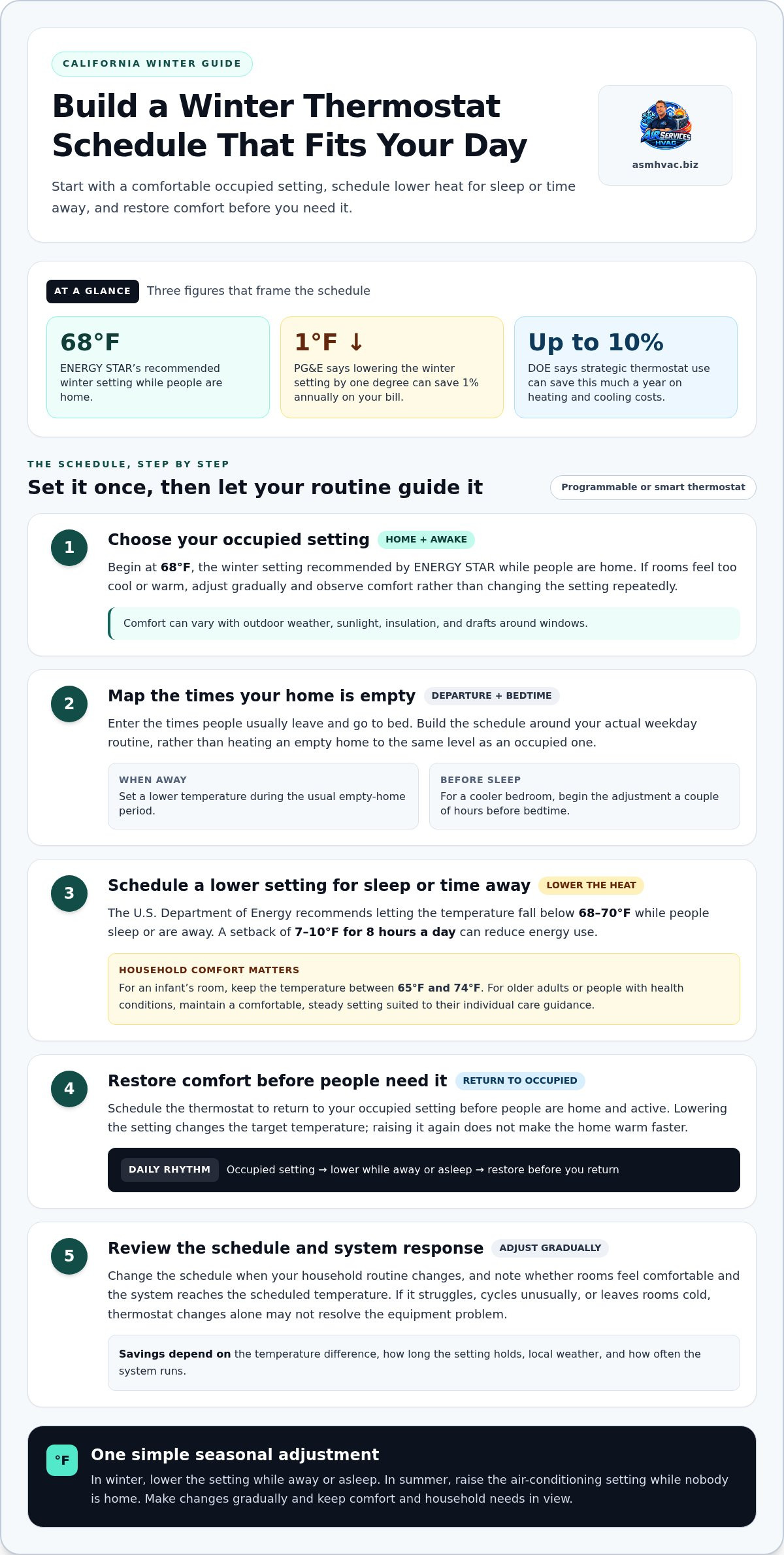
Setting your thermostat to 68°F can save money, but your schedule matters too. The best temperature to set your thermostat in winter in California is generally 68°F when you’re home; ENERGY STAR also recommends 68°F in winter while people are at home. According to PG&E, lowering the thermostat by one degree during winter can save 1% annually on your bill.
That’s useful if you want to stay comfortable without heating an empty home or keeping the system running harder than needed. This guide explains what the 68-degree setting can do, how to schedule lower temperatures while you sleep or are away, and why turning down the heat can reduce energy use. You’ll also learn when a furnace or HVAC system may need attention to work reliably through the season.
Key Takeaways
- Try 68°F while you’re home in winter; ENERGY STAR recommends this setting, and PG&E says lowering the thermostat by one degree can save 1% annually on your bill.
- Set a programmable thermostat to lower the heat while you’re asleep or away, then return it to your comfort setting before you’re home.
- Use scheduled setbacks to reduce heating and cooling use; the U.S. Department of Energy says strategic thermostat use can save up to 10% a year on those costs.
- If your system struggles to maintain the set temperature, furnace repair or AC repair can address heating or cooling problems that thermostat adjustments alone won’t fix.
1. Does setting my thermostat to 68 degrees really save money?
Yes, 68°F is a practical winter thermostat setting for California homes when people are home and awake. ENERGY STAR recommends setting the thermostat to 68°F in winter while people are at home. According to PG&E, lowering the thermostat by one degree during winter can save 1% annually on your bill.
Comfort can vary with outdoor weather, sunlight, insulation, and drafts around windows. Start at 68°F, then adjust gradually if rooms feel too cold or warm. A steady setting helps you assess comfort without frequent turning up and lowering that may make the home harder to regulate.
For a quick explanation of winter thermostat settings and energy savings, watch this video:
When you’re asleep or away, use a lower setting rather than heating an empty home. The U.S. Department of Energy recommends letting the temperature fall below 68 to 70°F while people sleep or are away. Lowering it around 10°F at night or while the house is vacant can save energy.
For an infant’s room, keep the temperature between 65°F and 74°F. For older adults or people with health conditions, maintain a comfortable, steady setting suited to their individual care guidance. Likewise, household pets can be sensitive to chilly indoor setbacks, and dog owners seeking guidance on keeping older companions comfortable and thriving can turn to caninelongevityacademy.com for vet-led senior dog care support.
Choose a setback that still works for your household, then use a schedule to return the home to 68°F before people are active there. This balances comfort with reduced heating use; summer cooling costs depend on separate thermostat settings.
2. Programmable and smart thermostat schedules
A programmable thermostat can follow your routine automatically. Set a comfortable temperature for when you’re home, then schedule a lower setting while you sleep or are away. This avoids heating an empty home to the same level as an occupied one. Smart thermostats can also follow schedules, so review them when your household routine changes.
Build a simple weekday schedule around actual departures and bedtime. For example, set your thermostat to lower the heat after everyone leaves, then restore the occupied setting before people return. The U.S. Department of Energy recommends letting the temperature fall below 68 to 70 degrees while people are sleeping or away. Keep in mind that comfort and household needs should guide the schedule.
Use these steps to set up the schedule:
- Choose the temperature you prefer while home and awake.
- Enter the times your home is usually empty and when people go to bed.
- Set lower temperatures for those periods, then schedule a return to your occupied setting.
- Review the schedule after a routine change, such as a new workday or bedtime.
If you prefer a cooler bedroom, begin adjusting the programmable thermostat a couple of hours before bedtime. That gives the indoor temperature time to respond before sleep. During colder weather, a setback of 7 to 10°F for 8 hours a day can reduce energy use. Adjust the schedule gradually and observe comfort, rather than making several changes at once.
Further, note whether the system reaches the scheduled temperature as expected. If it doesn’t, a furnace repair service can address heating problems that scheduling alone won’t solve.
3. Heating and cooling savings from lowering the thermostat
Thermostat adjustments reduce energy use by changing how often heating or cooling runs. In winter, lowering the indoor setting means the heating system works to maintain a cooler temperature. In warm weather, raising the air-conditioning setting can reduce cooling demand. The U.S. Department of Energy says strategic thermostat use can save up to 10% a year on heating and cooling costs.
In winter, set the thermostat lower while you’re away or asleep, then return it to your preferred setting before you need the room to feel comfortable. A smaller difference between indoor and outdoor temperatures means less heat escapes through walls and windows. In summer, use the reverse approach: set the temperature higher when nobody is home instead of cooling empty rooms.
Make each adjustment practical:
- Choose a comfortable occupied setting, then schedule a cooler indoor temperature during winter absences.
- Set the heating schedule to restore comfort before you return home.
- In summer, raise the air-conditioning setting while you’re away, then lower it to your preferred level at home.
- Change the thermostat by a degree at a time and note how comfort and system operation respond.
Energy savings depend on the temperature difference, how long the setting holds, local weather, and how often the system runs. Lowering the winter setting won’t make the home warm faster when you raise it again; it changes the target temperature, not the heating speed. A consistent schedule makes adjustments easier to maintain and helps avoid unnecessary heating or cooling throughout the year.
Air Services HVAC: AC repair
If thermostat adjustments don’t resolve a heating or cooling problem, Air Services Mechanical can help. If your furnace struggles to maintain the scheduled temperature, cycles unusually, or leaves rooms cold, furnace repair can address the equipment issue rather than relying on further thermostat changes.
For cooling problems, including an air conditioner that won’t maintain your chosen setting, Air Services Mechanical provides AC repair. A thermostat schedule can reduce unnecessary system use, but it can’t fix faulty equipment. Persistent temperature swings or uneven heating are practical reasons to arrange service.
Contact Air Services HVAC or visit asmhvac.biz to discuss the HVAC problem affecting your home.
Make your next thermostat adjustment with confidence
Finding the best temperature to set your thermostat in winter in California is a practical process: notice how your home feels during your usual routine, then make measured adjustments. Briefly note room comfort and system performance to help distinguish a scheduling issue from a heating problem. If thermostat changes don’t resolve uneven warmth or unreliable operation, an HVAC professional can help identify the next step.
Air Services Mechanical offers furnace repair for heating concerns and AC repair when cooling equipment needs attention. The company also installs ductless mini-split systems for homes suited to that type of system. Choose support based on the issue you’re experiencing, rather than continuing to change settings that aren’t addressing it.
Contact Air Services HVAC for thermostat help and take the next step toward a more comfortable home.
Frequently Asked Questions
Does setting my thermostat to 68 degrees really save money?
It can, especially if you lower the setting when the house is empty or everyone is asleep. For example, if your household keeps the home warmer than needed during work hours, use a schedule to avoid that extra heating. Savings depend on factors such as outdoor weather, insulation, and how long the home stays at each setting.
What Temperature Should I Set My Thermostat to in the Winter?
For California homes, the best temperature to set a thermostat in winter is generally 68°F while people are home. If that feels uncomfortable, adjust the setting gradually and see how the household responds. Room layout, sunlight, and drafts can affect comfort, so use the temperature where people spend time as your guide.
How can I save energy and keep electricity bills low?
Use a thermostat schedule while the home is empty, and avoid frequent manual changes throughout the day. SMUD recommends cleaning HVAC filters once a month during the coldest and warmest months. In a Redlands home, pair these habits with awareness of local cold spells and changes to your daily routine. For long-term utility savings, California homeowners can also explore comprehensive HVAC and renewable energy solutions with companies like HelioCore Inc.
What are the energy-saving advantages of adjusting the thermostat?
Changing the thermostat can affect how often your heating or cooling system runs to maintain indoor comfort. A lower winter setting while you’re away limits heating demand, while a higher summer setting when you’re out reduces cooling demand. A schedule keeps those adjustments consistent, so the system doesn’t maintain the same comfort level in an empty home.
What temperature should you keep your house at?
To find the best temperature to set your thermostat in winter in California, consider household comfort and how each room feels during daily use. A range of 68 to 70°F can help limit unnecessary strain on a home’s HVAC system. If rooms feel different, consider sunlight, closed doors, and drafts before changing the thermostat for the whole house.


