
What if a rooftop unit’s most obvious symptom isn’t the problem causing it? A commercial cooling failure can affect employees, customers, equipment, and daily operations. Rooftop equipment can also be unsafe for untrained staff to inspect. Reliable commercial rooftop unit repair starts with diagnosing the system, not just treating the visible issue.
When cooling becomes inconsistent or a unit keeps failing, you need a clear explanation and a repair process that limits unnecessary disruption. This article covers warning signs that call for professional service, what to expect during a diagnostic and repair visit, and how a local commercial HVAC team can help. Air Services HVAC is locally owned and operated in Redlands, with more than 20 years of industry experience. Its NATE-certified and EPA-certified technicians serve businesses across the Inland Empire.
Key Takeaways
- Uneven temperatures, unusual noises, and unexpected shutdowns warrant attention, but a single symptom may have more than one cause.
- Effective commercial rooftop unit repair starts with documenting symptoms and assessing system operation before deciding on an appropriate repair.
- Knowing which areas technicians may inspect, including controls, electrical connections, airflow, and heat-transfer surfaces, helps you understand the diagnostic visit.
- Air Services Mechanical provides commercial HVAC repair in Redlands and nearby Inland Empire communities, with certified technicians and 24/7 emergency service.
Commercial Rooftop Unit Repair: Warning Signs Businesses Should Take Seriously
Rooms that won’t cool, uneven temperatures across a workspace, unusual rooftop-equipment noises, or an unexpected shutdown can disrupt employees, customers, and daily operations. These signs deserve attention, but none points to one fault on its own. Changes in comfort or operation can have several possible causes, so commercial rooftop unit repair should begin with professional diagnosis rather than a guess based on one symptom.
Which rooftop unit symptoms mean it is time to call for repair?
Look for changes in four areas. Note where and when they occur, and whether they return after the unit starts running again. That record can help a technician understand the pattern.
- Comfort: Some rooms stay warm, temperatures vary across the building, or cooling becomes inconsistent.
- Airflow: Air from vents feels weaker than usual, or airflow differs noticeably between areas.
- Noise: The unit makes unfamiliar rattling, buzzing, or other persistent sounds during operation.
- Operating patterns: The system shuts down unexpectedly, cycles irregularly, or repeatedly stops and restarts.
A unit restarting doesn’t necessarily mean the underlying issue has gone away. If a shutdown or comfort problem keeps returning, record when it happens and which areas are affected, then arrange professional service. Persistent cooling loss calls for professional diagnosis, even if the rooftop unit starts up again.
Don’t send untrained staff onto the roof to investigate. Rooftop equipment can be difficult and unsafe to access, and an informal inspection may miss the cause or create additional risk. Keep observations to what staff can safely notice indoors, such as room conditions, vent airflow, and changes in sound. Leave rooftop access and equipment inspection to qualified technicians.
How Commercial Rooftop Unit Repair Diagnostics Help Find the Real Problem
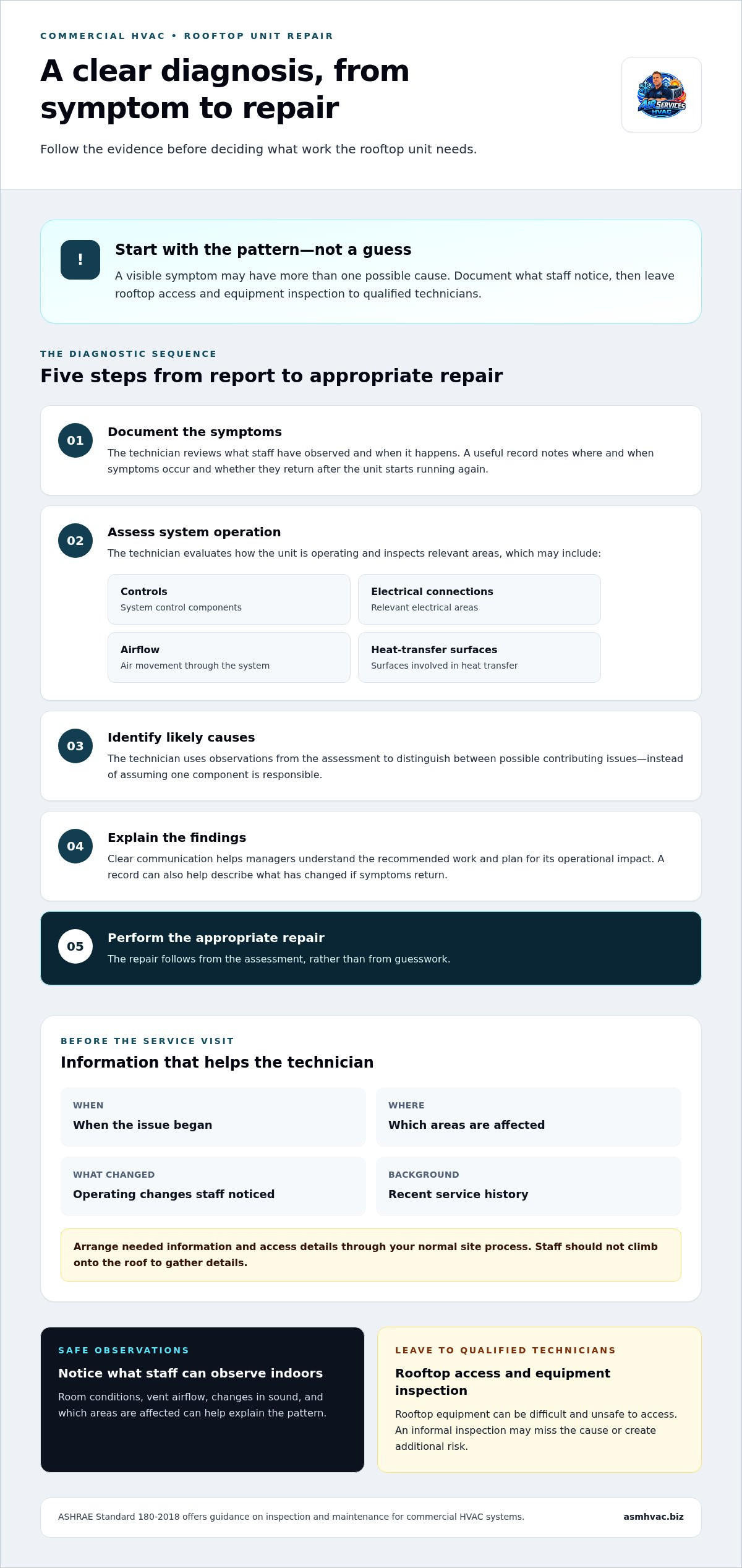
A reliable diagnosis follows the evidence from the reported symptom to the system’s operation. For commercial rooftop unit repair, technicians assess relevant areas, such as controls, electrical connections, airflow, and heat-transfer surfaces. These checks help narrow down possible causes instead of assuming one component is responsible. ASHRAE’s ASHRAE Standard 180-2018 offers guidance on inspection and maintenance for commercial HVAC systems.
- Document the symptoms. The technician reviews what staff have observed and when it happens.
- Assess system operation. They evaluate how the unit is operating and inspect relevant areas.
- Identify likely causes. Observations help distinguish between possible contributing issues.
- Explain the findings. Clear communication helps managers understand the recommended work and plan for its operational impact.
- Perform the appropriate repair. The repair follows from the assessment, rather than from guesswork.
Knowing what the technician found and why a repair is recommended helps a manager plan around service and communicate operational impacts to staff. It also gives the business a clearer record if symptoms return, making it easier to describe what has changed since the visit.
What should a business prepare before an RTU service visit?
Share when the issue began, which areas are affected, what operating changes staff noticed, and any recent service history. Arrange the information and access details the technician needs through your normal site process. Staff should not climb onto the roof to gather details. Businesses in Ontario can also explore commercial HVAC services in Ontario, CA for related service context.
Air Services Mechanical provides commercial HVAC repair, including rooftop unit service. Learn more about commercial HVAC repair from the Inland Empire team.
Commercial Rooftop Unit Repair in the Inland Empire: Plan Your Next Step
Persistent cooling loss, repeated shutdowns, or operating symptoms that are getting worse are good reasons to arrange professional service. When a unit continues to struggle, it can be harder to plan around conditions in occupied spaces. A clear service assessment gives your team information to make practical decisions about what to do next.
Air Services Mechanical is locally owned and operated in Redlands and serves nearby Inland Empire communities, including Yucaipa, Highland, Fontana, Rancho Cucamonga, and Ontario. The team provides commercial HVAC repair with NATE-certified and EPA-certified technicians. For urgent commercial HVAC needs, 24/7 emergency service is available.
When should an Inland Empire business request commercial RTU service?
Request service when cooling loss persists, the rooftop unit shuts down repeatedly, or its operating symptoms become more noticeable. Share what staff have observed and which areas are affected so the technician has useful context. Air Services Mechanical provides commercial rooftop unit repair for local businesses, starting with a professional assessment and the appropriate repair.
For a broader perspective on caring for HVAC systems between service calls, see this guide to preventative HVAC maintenance services. It offers related guidance but does not replace a technician’s assessment when a commercial unit is showing a problem.
Air Services Mechanical provides rooftop unit service in the Inland Empire. Learn about commercial HVAC service.
Keep Your Business Moving With a Clear Next Step
A rooftop unit problem can put pressure on daily decisions, especially when comfort affects staff, customers, or sensitive work areas. Use the service visit to clarify what needs attention and consider how cooling concerns affect your operations. That gives your team a practical basis for planning, rather than relying on repeated restarts or assumptions about the cause.
Experienced help with commercial rooftop unit repair can make the path forward easier to understand. Air Services Mechanical is a licensed, bonded, and insured HVAC contractor with more than 20 years of experience. Its NATE-certified and EPA-certified technicians provide commercial service, including 24/7 emergency service for businesses in the Inland Empire and San Bernardino communities.
For commercial rooftop unit repair in Redlands and the Inland Empire, request commercial HVAC service from Air Services Mechanical.
Frequently Asked Questions
What are common signs that a commercial rooftop unit needs repair?
Loss of cooling, uneven temperatures, unusual sounds, and repeated shutdowns can indicate a need for professional attention. To make your report more useful, note whether the problem affects one area or the entire building, and whether it appears during a particular operating period. These details can guide commercial rooftop unit repair diagnostics, but no single symptom confirms a specific fault.
Can a commercial rooftop unit keep running if it is not cooling properly?
A unit may continue to run, but whether operation should continue depends on its condition and the symptoms. If cooling remains poor or shutdowns recur, don’t assume continued operation is harmless. Arrange a professional assessment and follow your site’s procedures for affected spaces or equipment. Avoid opening rooftop equipment panels or attempting adjustments without proper training.
How long does commercial rooftop unit repair take?
Repair time varies with the diagnosed cause, equipment condition, and work required, so a reliable estimate comes after assessment. Some issues may involve a more limited repair, while others require additional investigation or work. Tell the technician about building access windows or business activities that could affect scheduling, then use the explained findings to plan around service.
Should a business repair or replace a commercial rooftop unit?
That decision should follow an assessment of the unit and the needs of the business, not a single symptom. Ask for a clear explanation of the identified problem and the available next steps. Consider how the unit’s condition, repair needs, and role in day-to-day operations factor into the decision. A recurring symptom alone doesn’t establish that replacement is necessary.


