
Weak airflow can point to a furnace problem, but it does not necessarily mean the blower motor has failed. When vents barely push air, the furnace runs without circulating heat, or the blower makes an unfamiliar humming or squealing noise, furnace blower motor repair may be needed.
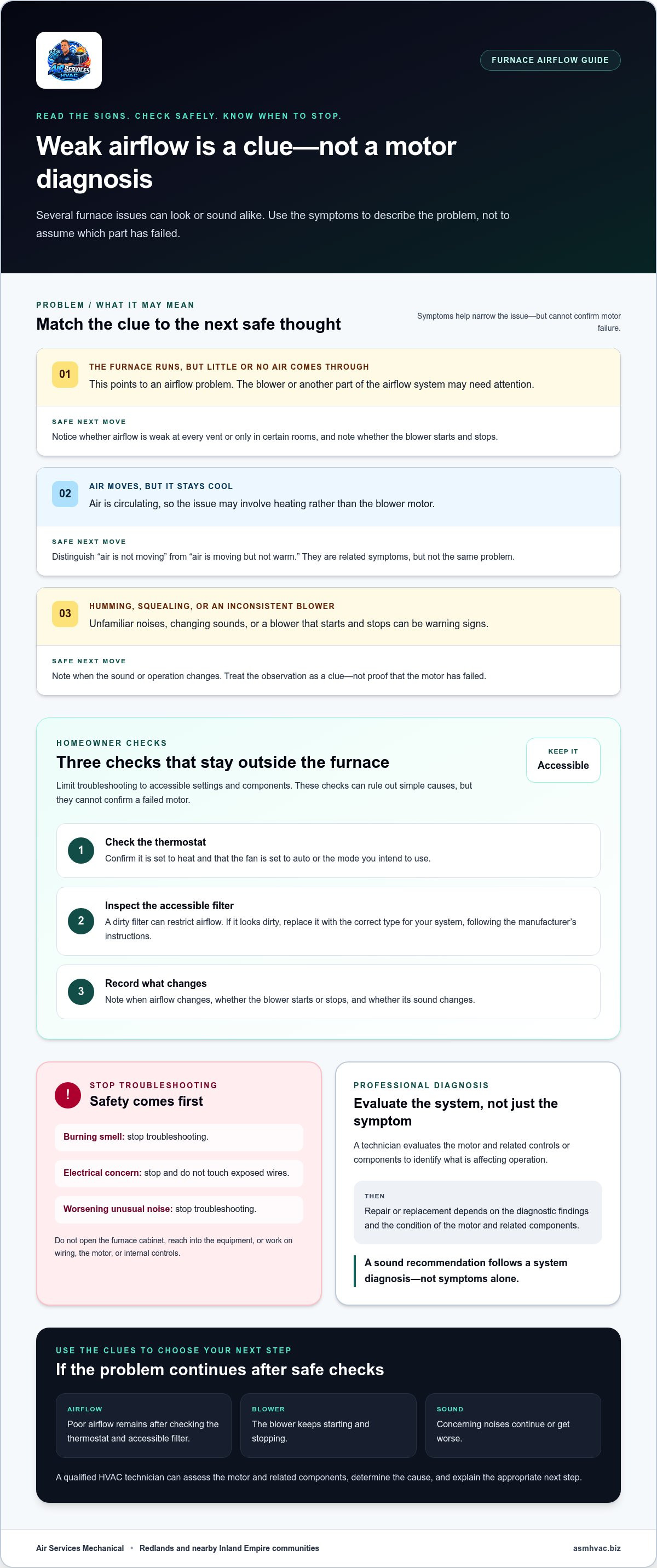
These warning signs can help narrow down the issue, but airflow problems have several possible causes. This guide explains what common blower motor symptoms look and sound like, which basic checks are safe to try, and when to stop troubleshooting. You’ll also learn what a technician evaluates before recommending repair, so you can take a clear next step without guessing.
Key Takeaways
- Distinguish a heating problem from an airflow problem by noting whether air is moving and whether it feels warm.
- Weak airflow, unusual sounds, or an inconsistent blower can point toward furnace blower motor repair, but they don’t confirm the cause.
- Check thermostat settings and the accessible filter. Stop if you notice a burning smell, electrical concern, or worsening noise.
- A technician evaluates the motor and related controls or components before recommending the next step.
Furnace Blower Motor Repair: Signs the Motor May Need Attention
A furnace that isn’t heating and a blower motor that isn’t moving air are related problems, but they’re not the same. If the furnace runs yet little or no air comes through the vents, the blower or another part of the airflow system may need attention. If air circulates but stays cool, the issue may involve heating rather than the blower motor.
In a forced-air central heating system, the blower moves heated air through the ductwork and into the home. Notice whether airflow is weak at every vent or only in certain rooms, whether the blower starts and stops, and whether the sound changes as it runs. Those details can help describe the problem, but they don’t identify the cause on their own.
For a visual overview of blower troubleshooting, watch this video:
Possible warning signs include:
- Weak or absent airflow from vents
- Humming, squealing, or other unfamiliar furnace noises
- A blower that starts and stops inconsistently
- The furnace running without air circulating
Airflow symptoms can have multiple causes, so treat them as clues to investigate, not proof of motor failure.
Could a clogged filter or thermostat cause similar furnace symptoms?
Yes. A dirty filter can restrict airflow, while thermostat settings can affect whether the blower is called to run. Check these simple possibilities before assuming furnace blower motor repair is needed. If the furnace is circulating air that stays cool, see our furnace repair guide for San Bernardino. A professional diagnosis can distinguish a motor issue from a filter, control, or other furnace problem.
What to Check Before Scheduling Furnace Blower Motor Repair
A few basic checks can rule out simple causes and give a technician useful information. Limit your checks to accessible settings and components. Don’t open the furnace cabinet or attempt work on wiring, the motor, or internal controls.
Which blower motor troubleshooting checks are safe for homeowners?
Start at the thermostat. Confirm it’s set to heat and that the fan setting is on auto or the mode you intend to use. Next, inspect the accessible air filter. If it looks dirty, replace it with the correct type for your system, following the manufacturer’s instructions. Then note what happens: whether the blower starts or stops, whether its sound changes, and whether airflow changes at the vents. These observations can guide diagnosis, but they can’t confirm that the motor has failed.
- Check: Thermostat mode and temperature setting.
- Inspect: The filter you can access safely.
- Record: When airflow or blower sounds change.
Stop troubleshooting if you notice a burning smell, an electrical concern, or unusual noises that are getting worse. Don’t touch exposed wires or reach into the equipment. Internal inspection and electrical or mechanical work belong to a qualified HVAC technician. For broader routine-care guidance, see our preventative HVAC maintenance guidance.
If these safe checks don’t resolve the issue, professional diagnosis can determine whether furnace blower motor repair is appropriate or another furnace component is involved. Air Services Mechanical provides furnace repair for homeowners in Redlands and nearby Inland Empire communities.
How a Technician Diagnoses Blower Motor Problems and Plans Repair
Weak airflow or an intermittent blower can involve several parts of the furnace, so a technician looks beyond the symptom. Diagnosis includes evaluating the motor and related controls or components to identify what is affecting operation. The aim is to find the cause before recommending work, rather than replacing a part based only on a sound or airflow complaint.
A sound repair recommendation follows a system diagnosis, not symptoms alone.
Once the cause is clearer, the technician can explain whether repair or replacement is appropriate. That decision depends on the diagnostic findings and the condition of the motor and related components. There isn’t one answer for every furnace, so the recommendation should reflect the system’s actual needs rather than assume a particular part or outcome.
When should a homeowner call for furnace blower motor repair in Redlands?
Arrange a professional evaluation if airflow remains poor after basic checks, the blower keeps starting and stopping, or concerning noises continue. Stop troubleshooting if you notice a burning smell or electrical concern. Air Services Mechanical provides furnace repair in Redlands and nearby Inland Empire communities. Our NATE-certified and EPA-certified technicians can assess the system and explain the next step.
If the problem persists, schedule furnace repair service with Air Services Mechanical. A clear diagnosis helps avoid guesswork and guides the repair recommendation.
Use the Clues to Choose Your Next Step
Weak airflow, unusual noises, or an inconsistent blower can signal a problem, but they don’t prove the motor has failed. Check thermostat settings and the accessible filter, then note what you observe. If the issue continues, a technician can assess the motor and related components before recommending furnace blower motor repair or another solution.
Air Services Mechanical serves Redlands and nearby Inland Empire communities. Our NATE-certified and EPA-certified technicians bring more than 20 years of industry experience. We’re a licensed, bonded, and insured HVAC contractor.
For a diagnosis and help deciding what to do next, schedule furnace repair with Air Services Mechanical. Our team can assess the issue and explain the recommended next step.
Frequently Asked Questions
What are the common signs of a failing furnace blower motor?
Common warning signs include weak or absent airflow, humming or squealing noises, and a blower that starts and stops unpredictably. The furnace may also run without circulating air. These symptoms can indicate a blower motor issue, but they don’t confirm one. Furnace blower motor repair should follow a diagnosis of the motor and related components.
Can I run my furnace if the blower motor is not working properly?
It’s best to stop running the furnace if the blower isn’t moving air properly. Without adequate airflow, the system may shut down or continue operating abnormally. Turn it off if you notice a burning smell, an electrical concern, or worsening unusual noise, and arrange a professional evaluation. Don’t open the furnace or attempt repairs to internal parts.
Can a dirty furnace filter cause symptoms that look like a blower motor problem?
Yes. A dirty filter can restrict airflow, so vents may deliver less air even if the blower motor isn’t the cause. Check only the accessible filter and replace it according to the furnace manufacturer’s instructions if it’s dirty. If airflow remains weak afterward, or the blower behaves inconsistently, a technician can assess the motor and other possible causes.
How does a technician decide whether to repair or replace a furnace blower motor?
A technician evaluates the motor and related controls or components to identify what’s causing the problem. The findings and condition of the affected parts guide whether repair or replacement is appropriate. Symptoms alone aren’t enough to make that call. In Redlands, Air Services Mechanical’s NATE-certified and EPA-certified technicians provide furnace repair and can explain the diagnosis and recommended next step.


