
Imagine settling in for a quiet evening in Redlands, only to realize the air coming from your vents feels more like a draft than a heater. It's a common frustration that often leads to immediate stress over potential costs and complex mechanical failures. You shouldn't have to shiver in your own living room while trying to decipher HVAC manuals. While some issues require a professional furnace repair Redlands expert, many cold air problems stem from simple settings or maintenance oversights you can handle yourself.
In this article, you'll learn how to diagnose common culprits behind a cold furnace before calling for help. We'll walk through five practical fixes to help you restore warmth quickly. This guide will give you the clarity to know when a DIY approach is safe or when it's time to call in a NATE-certified technician for a reliable, long-term solution.
Key Takeaways
- Start with the basics by verifying your thermostat settings and inspecting your air filter for clogs that restrict heat flow.
- Learn how mechanical safety features, such as a dirty flame sensor or an activated limit switch, can cause your system to blow cold air.
- Recognize critical safety red flags like gas odors or yellow flames that require immediate professional furnace repair Redlands.
- Understand how NATE-certified diagnostics protect your budget by pinpointing specific mechanical failures rather than relying on trial-and-error repairs.
Immediate Troubleshooting: The DIY Furnace Cold Air Checklist
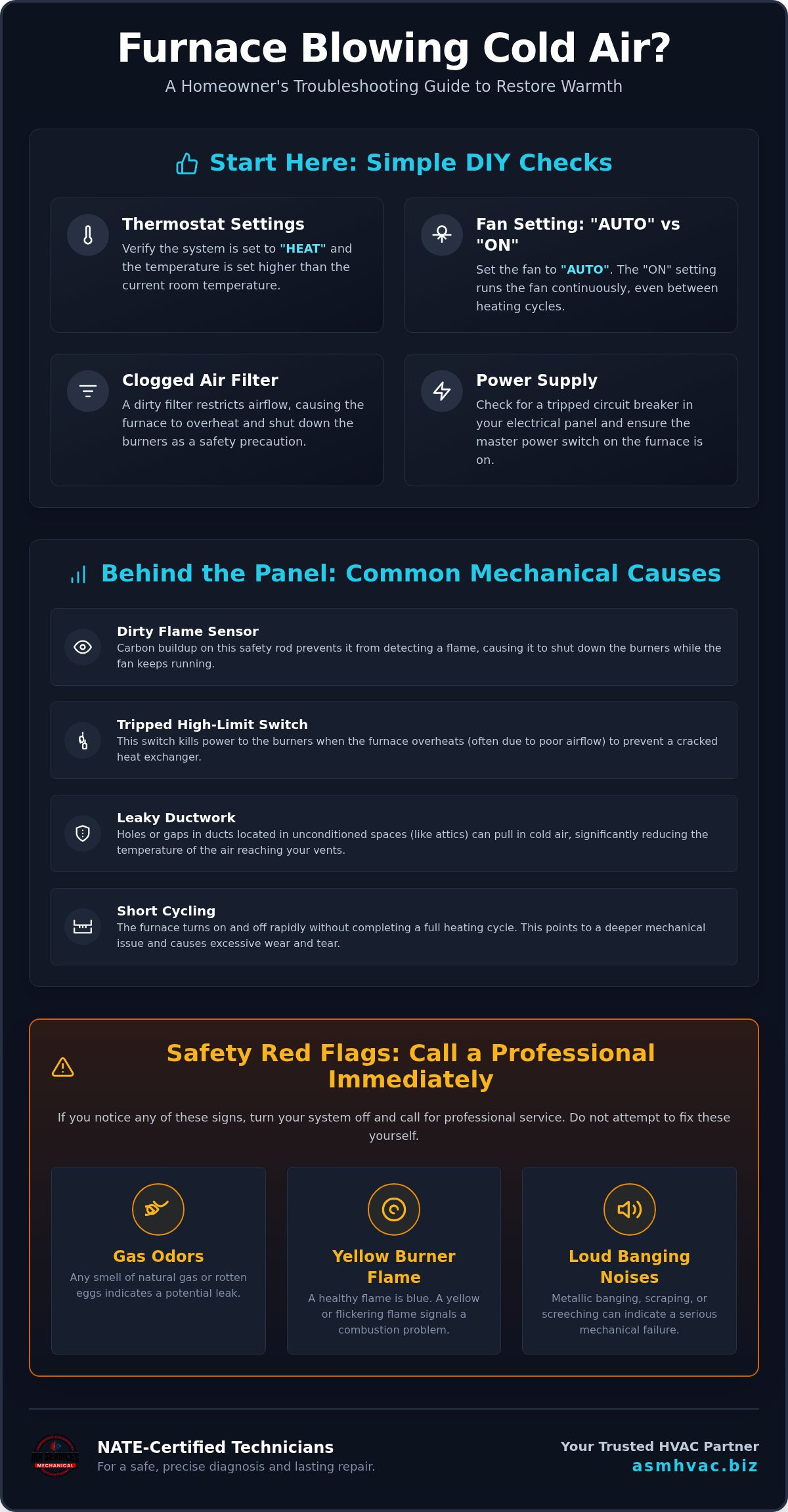
Before you schedule a professional furnace repair Redlands, a few simple checks can often resolve the issue. Start with the most basic components to rule out accidental settings. Verify that your thermostat is set to "Heat" and the temperature is higher than the current room reading. It's surprisingly easy for a system to be switched to "Off" or "Cool" during seasonal transitions or while cleaning.
Next, inspect your air filter. A heavily soiled filter restricts the volume of air moving through the system. When airflow is blocked, the internal temperature of the furnace rises too high. To prevent damage, the system triggers a safety shutdown of the burners while keeping the fan running to cool the heat exchanger. This results in cold air blowing through your vents even though the system is technically powered on.
- Pilot Light: For older units, a sudden draft can extinguish the flame and prevent the burners from igniting.
- Power Switch: Ensure the master switch on the side of the furnace cabinet hasn't been accidentally flipped off.
- Circuit Breaker: Check your electrical panel for a tripped breaker dedicated to the HVAC system.
The "Fan On" vs. "Fan Auto" Distinction
If your furnace blows cold air intermittently, check the fan setting on your thermostat. The "On" position keeps the blower running continuously, even when the furnace isn't actively heating. This circulates unheated air throughout your home during the gaps between heating cycles. Switching the setting to "Auto" ensures the fan only activates when the burners are lit. This simple adjustment often provides the immediate comfort you need without requiring a professional furnace repair Redlands visit.
Behind the Panel: Common Mechanical Causes of Cold Air
If basic troubleshooting doesn't restore heat, the issue likely lies within the internal mechanical safety features. One of the most frequent causes is a dirty flame sensor. This small metallic rod detects if a flame is present when the gas valve opens. If the sensor is coated in carbon buildup, it fails to "see" the fire and shuts the burners down as a safety precaution. This leaves the blower fan running, pushing unheated air through your vents.
Another critical component is the high-limit switch. This sensor monitors the temperature inside the heat exchanger. If the system overheats, usually due to the airflow restrictions mentioned earlier, the limit switch kills the burners to prevent a cracked heat exchanger; however, the fan continues to run to dissipate the dangerous heat. Additionally, for homeowners with high-efficiency units, a clogged condensate drain line can trigger a full system lockout. If you find water pooling near your unit, it's a sign you may need professional furnace repair to clear the blockage safely.
Ductwork integrity also plays a significant role. Leaks in unconditioned spaces, such as an attic or crawlspace, can pull freezing air into the system. This dilutes the heated air before it ever reaches your living room. A professional furnace repair Redlands inspection can identify if your heat loss is happening inside the furnace or within the delivery system itself.
Why Your Furnace "Short Cycles"
Short cycling occurs when your furnace turns on and off rapidly without ever reaching your desired thermostat setting. This behavior puts immense strain on your blower motor and igniter. While it might seem like a minor annoyance, constant restarts often point toward deeper mechanical failures that require furnace repair San Bernardino specialists to diagnose safely. Identifying these patterns early prevents a total system breakdown during a cold Inland Empire night. If your system won't stay on for more than a few minutes, scheduling a furnace repair Redlands service call is the most reliable way to protect your equipment.
Professional Solutions and When to Call for Furnace Repair in Redlands
While DIY checks resolve minor issues, certain symptoms indicate a serious mechanical failure. If you smell gas, hear loud metallic banging, or notice yellow rather than blue flames, turn your system off immediately. These red flags suggest combustion problems or cracked components that pose safety risks. In these moments, securing a professional furnace repair Redlands service is the only safe way to proceed.
Choosing a Reliable HVAC Partner in the Inland Empire
Finding a trustworthy technician shouldn't be stressful. Look for a team that offers straightforward pricing and 24/7 availability for emergency furnace repair Rancho Cucamonga. With over 20 years of industry experience, Air Services Mechanical acts as a dependable veteran for our neighbors. We prioritize long-term results and integrity, ensuring your furnace repair Redlands needs are met with technical expertise and honest communication. Whether it's a midnight emergency or a standard checkup, having a steady guide makes all the difference in maintaining home comfort. For those seeking similar professional HVAC support in other regions like Fort Worth, you can learn more about Prestige Air and their expert residential solutions.
Restoring Reliable Warmth to Your Home
Understanding whether your heating issue is a simple filter clog or a complex mechanical failure helps you manage home maintenance with confidence. While DIY checks often resolve minor airflow problems, persistent cold air usually signals a need for technical expertise. Our NATE and EPA certified technicians specialize in identifying the root cause of system failures, ensuring you don't waste money on unnecessary parts. We prioritize your peace of mind by offering straightforward pricing and 24/7 emergency service to keep your family warm through the Inland Empire's coldest nights.
When you need dependable furnace repair Redlands expertise, choosing a seasoned veteran ensures a lasting solution rather than a temporary fix. Restore your home’s comfort today; schedule your expert furnace repair with Air Services Mechanical. You can feel secure knowing your home is in capable, honest hands.
Frequently Asked Questions
Why is my furnace blowing cold air but the thermostat says it is on?
Your furnace often blows cold air if the thermostat fan is set to "On" rather than "Auto." This setting forces the blower to run continuously, even between heating cycles. If the setting is correct, the issue might involve a dirty flame sensor or a tripped limit switch. These mechanical failures often require a professional furnace repair Redlands diagnostic to identify the specific faulty component.
Can a dirty air filter really cause my heater to blow cold air?
A clogged air filter is one of the most common reasons for a heater blowing cold air. Restricted airflow causes the heat exchanger to reach dangerous temperatures, triggering the high-limit switch to shut off the burners. The fan continues to run to cool the unit, pushing unheated air into your home. Regularly replacing your filter prevents this specific safety shutdown from occurring.
How long should I wait for my furnace to blow warm air?
Most modern furnaces take about 45 to 90 seconds to begin blowing warm air. The system must first complete a safety purge and heat the igniter before the burners engage. Once the heat exchanger reaches a specific temperature, the blower fan starts. If the air doesn't turn warm after a few minutes, your system might be experiencing an ignition failure or a lockout.
Is it safe to leave my furnace running if it is blowing cold air?
You should turn your system off if it continues to blow cold air. While the fan itself isn't a hazard, the lack of heat could stem from a compromised heat exchanger or a gas valve malfunction. Running a faulty unit causes excessive wear on the blower motor and wastes electricity. It's best to schedule a furnace repair Redlands inspection to ensure the system is safe.


