

Don’t wait for the first cold night to plan furnace care. Schedule a furnace inspection once every year, ideally in early fall before turning on the heating system. Annual attention gives you time to address concerns before relying on the furnace for warmth.
It’s easy to put maintenance off when the system seems to be working, but the start of the season is a good time to check its condition. This article explains when to book service, what a professional inspection can cover, and how combustion analysis and routine maintenance support safe, efficient operation. You’ll also learn how an inspection differs from a tune-up, which warning signs need attention, and how to plan your next step.
Key Takeaways
- Plan professional furnace care before the heating season so there’s time to address issues before regular use.
- Combustion analysis helps assess how the furnace is burning fuel and can identify safety concerns that need attention.
- A maintenance appointment goes beyond diagnosis, with cleaning and checks that support reliable system operation.
- Unusual noises, a yellow pilot light, or a rotten egg smell are signs to arrange professional furnace service.
Why is furnace combustion analysis important?
Combustion analysis evaluates how a furnace burns fuel and can help identify carbon monoxide concerns. It complements visual checks of the burner, wiring, thermostat operation, filter, and temperature readings.
Combustion and Carbon Monoxide Testing
A technician uses combustion analysis to assess furnace operation and measure carbon monoxide in combustion gases. Testing can help detect a problem that a visual review alone may miss. Sustained carbon monoxide concentrations above approximately 70 ppm can cause more noticeable symptoms. Above 150-200 ppm, sustained exposure can cause disorientation, unconsciousness, and death. These readings make accurate testing a safety priority, not simply an efficiency check.
Furnace Safety and Detector Checks
A safety review can include the burner, electrical wiring, thermostat response, filter condition, and operating temperatures. The technician also tests smoke and carbon monoxide detectors using their test functions, considering how each warning device responds alongside the furnace. A blue pilot light is normal; a yellow pilot light is a reason to arrange maintenance. Strange noises or a rotten egg smell also call for professional attention.
Skipping an annual furnace inspection can leave combustion or equipment problems undetected while the system is running. A faulty condition may expose occupants to carbon monoxide, which has no reliable visible warning. Detectors provide an additional alert, but they don’t replace furnace testing or maintenance. If a detector sounds, follow its safety instructions and leave the affected area.
Watch for changes in operation, such as unusual sounds or higher-than-normal energy bills. These signs don’t identify the cause, but they give a technician useful information to investigate. Note when the symptom occurs, whether the thermostat responds, and whether the furnace starts and stops normally. Sharing these observations helps guide the service visit.
What are the benefits of regular furnace maintenance?
Annual maintenance gives a technician time to assess heating components, clean the system, and identify wear before peak use.
Annual Maintenance Timing
Arrange professional maintenance once every year, ideally in early fall before turning on the heating system. This timing leaves room to address service needs before regular operation begins. Follow the manufacturer’s maintenance instructions, since recommended care can vary by equipment. A clean filter supports airflow, while a seasonal appointment evaluates the system as a whole.
Routine Maintenance Benefits and Plans
Routine care helps keep heating components clean and operating as intended. Checking airflow, electrical connections, and the heat exchanger can reveal issues that affect comfort or safe operation. A service contract can help organize recurring maintenance. Review its written visit schedule, covered tasks, and terms so you understand what membership includes rather than assuming every plan offers the same benefits.
A maintenance appointment may include cleaning, checking system operation, and replacing minor worn parts. The technician can assess the thermostat, inspect accessible components, and review airflow. An inspection is primarily diagnostic; a tune-up adds active maintenance. Ask for a clear explanation of findings and recommended work, including which item needs attention first. This makes the appointment’s scope easier to understand.
When choosing a local furnace professional, look for clear explanations of the inspection findings and recommended work. Reputable providers like Peters Heating & Cooling demonstrate the value of clarifying what an appointment covers, including cleaning and testing, and whether any follow-up repairs are separate from routine maintenance. A clearly described scope helps you understand what the service includes.
For scheduled upkeep, explore preventative maintenance options.
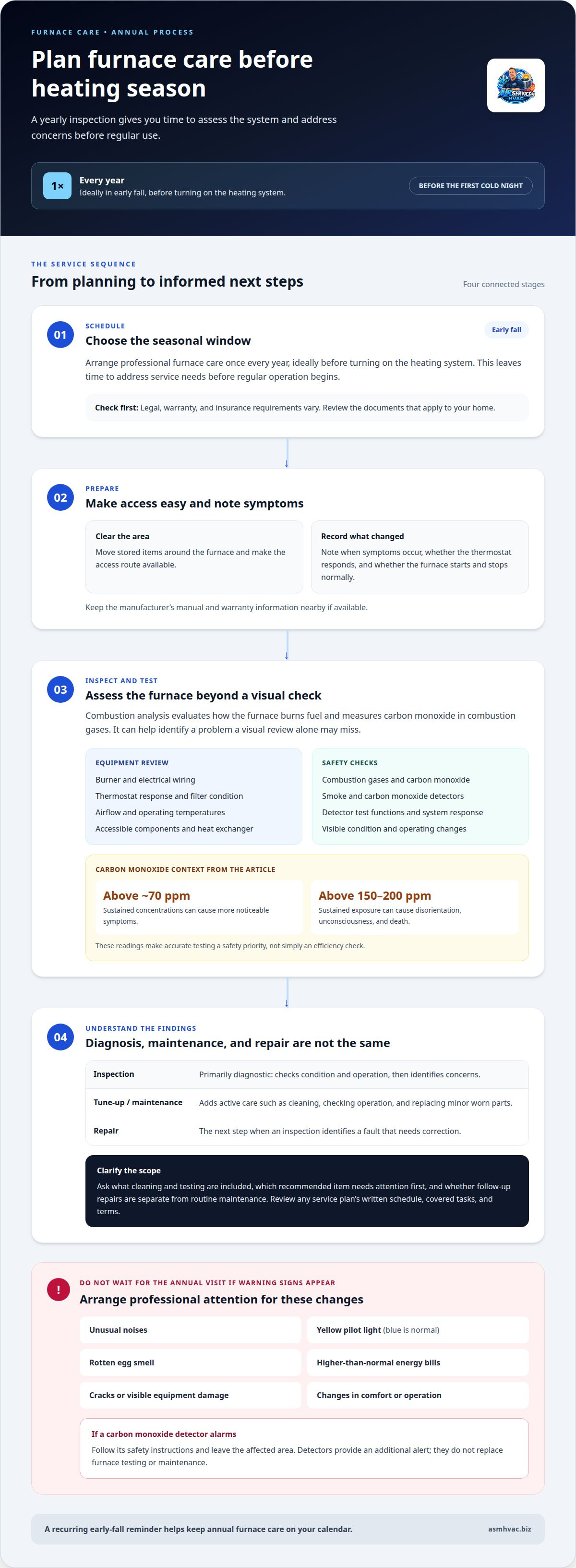
Annual furnace inspection timing
Plan a professional furnace inspection once every year, ideally in early fall before seasonal heating begins. A furnace inspection at this point gives a technician time to assess the system before colder weather makes dependable operation more important.
Legal, warranty, and insurance requirements vary. Review the documents that apply to your home before scheduling, since their requirements may affect maintenance or repair.
The cost depends on the furnace, home, and inspection scope, and is provided after a quote request. A clear estimate should describe the work included, such as checks of electrical connections, venting, controls, and the heat exchanger. Comparing estimates is most useful when each describes a similar scope.
Don’t wait for the annual visit if the furnace develops warning signs. Strange noises, a yellow pilot light, a rotten egg smell, or higher-than-normal energy bills are reasons to arrange service. Cracks or visible damage around equipment also deserve prompt attention. If a carbon monoxide detector alarms, follow its safety instructions and leave the affected area.
Before the appointment, clear stored items around the furnace and make its access route available. Note when symptoms occur, whether the thermostat responds, and any changes in comfort or operation. These details help focus the technician’s checks. Keep the manufacturer’s manual and warranty information nearby if available, so recommendations can be considered alongside the equipment’s requirements.
Set a recurring calendar reminder for early fall, then arrange preventative maintenance before the heating season.
Air Services HVAC: furnace repair
Air Services HVAC provides furnace repair when an inspection identifies a fault or the system develops operating problems. A diagnostic assessment can clarify whether an issue involves the burner, thermostat, electrical connections, or another component, helping direct the repair toward the cause.
Arrange service if your furnace makes unusual noises, has a yellow pilot light, or causes higher-than-normal energy bills. If a carbon monoxide detector alarms, follow its safety instructions and leave the affected area. Repair is the next step when an inspection identifies a problem that needs correction, while routine maintenance supports ongoing operation.
For a furnace concern that needs professional attention, contact Air Services HVAC to discuss furnace repair.
Make your next heating decision with confidence
After a furnace inspection, keep the technician’s findings with your equipment records. A note about recommended follow-up, replaced components, or changes in operation gives future service visits a clearer starting point. It also helps you describe when a concern first appeared, rather than relying on memory. Use the record to track recurring issues and explain changes in your home’s comfort.
Air Services Mechanical offers AC repair, furnace repair, and ductless mini-split systems for different home comfort needs. If you’re weighing a repair or planning what comes next, a clear conversation about your system’s condition can help you choose a practical next step.
Contact Air Services HVAC today to discuss your HVAC needs. A thoughtful plan can make the next season easier to manage.
Frequently Asked Questions
How often should a furnace be serviced?
Arrange professional service once every year, ideally in early fall. Set a recurring calendar reminder and record the service date with your furnace documents to keep the schedule consistent. Follow the manufacturer’s maintenance guidance for your system. If a repair is completed during the year, keep that record too, so the next technician can see what work was done.
What furnace maintenance tasks can homeowners do themselves?
Check the furnace filter monthly and replace it when dust builds up. Note the replacement date, and keep the correct filter information with your home maintenance records. Pay attention to changes in heating or system operation. Leave internal electrical work, burner adjustments, and heat-exchanger checks to a qualified technician rather than disassembling the furnace.
How does a technician check for a cracked heat exchanger?
A technician examines accessible heat-exchanger surfaces for visible damage and evaluates furnace operation. Combustion analysis can add information about how the furnace burns fuel, but the inspection method depends on the equipment’s design and access. If a crack or breach is found, the furnace should be shut down until the heat exchanger is replaced.
What Is a Furnace Inspection?
A furnace inspection is a diagnostic evaluation of the equipment’s condition and operation. The technician assesses components and looks for problems that could affect safe, dependable heating. Findings may identify an issue that needs repair. An inspection differs from a tune-up, which adds active maintenance, cleaning, and replacement of minor worn parts.
Why is it recommended to schedule maintenance before the heating season?
Scheduling before regular heating begins gives you time to address findings before depending on the furnace for warmth. For a Redlands household, make the appointment part of seasonal home preparation rather than waiting until the system is needed. This also leaves room to arrange follow-up work identified during the visit.


