

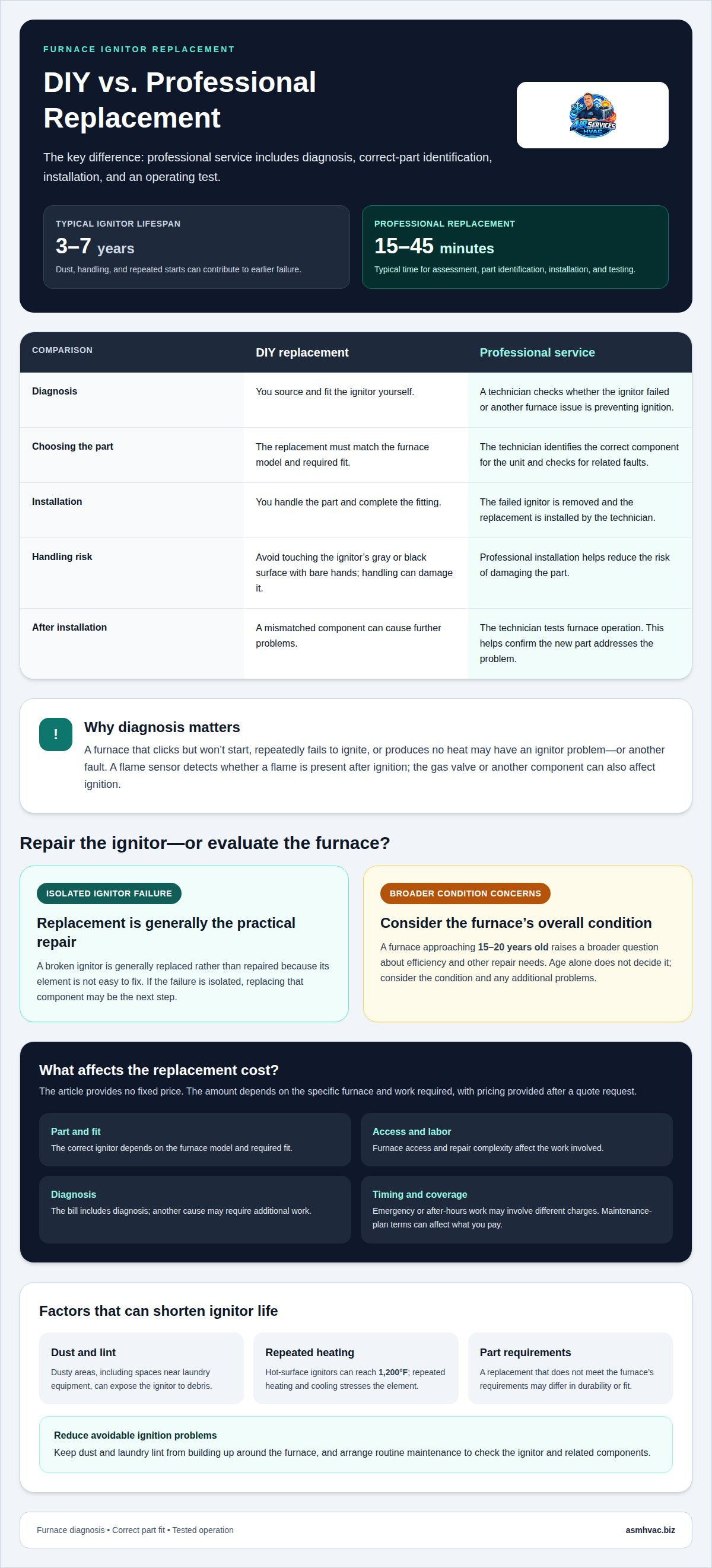
Most furnace ignitors last 3 to 7 years, but a failed ignitor doesn’t automatically mean the furnace needs replacing. The cost to replace a furnace ignitor depends on the part that fits the unit, the labor involved, and whether diagnosis uncovers another issue. The price depends on the specific furnace and work required, and is provided after a quote request.
It’s reasonable to want a clear idea of the expense before arranging a repair. This guide explains what affects the cost to replace a furnace ignitor, how the ignitor’s condition and furnace type factor into the decision, and what to expect from professional replacement. You’ll also learn why using the right part matters and how to recognize when a furnace problem may involve more than the ignitor.
Key Takeaways
- Compare the part and labor involved, since the correct ignitor and the work needed to reach and replace it affect the repair total.
- A professional diagnosis can help distinguish a failed ignitor from another furnace issue before parts are replaced.
- Furnace age, operating conditions, and the ignitor’s history can help explain why it failed and inform the repair decision.
- For a furnace that won’t heat, Air Services HVAC provides furnace repair to identify the problem and determine the appropriate next step.
How Long Does a Furnace Ignitor Last?
Most furnace ignitors last 3 to 7 years, but failure can happen sooner when dust, handling, or repeated starts stress the element. A failing ignitor may leave a natural gas furnace unable to light its burners, causing repeated startup attempts or no heat.
The right replacement depends on the furnace model and required fit. A mismatched component can cause further problems.
A professional replacement bill includes the ignitor, diagnosis, and labor. The cost to replace a furnace ignitor depends on the part, furnace access, and work needed to identify the fault; pricing is provided after a quote request. Labor also varies with repair complexity and whether the technician finds another cause.
Emergency or after-hours repairs may involve different charges depending on the timing and work required. A technician can diagnose the problem and explain the repair before proceeding. Air Services HVAC offers emergency AC repair and is available by phone around the clock.
If you have a maintenance plan, review what it covers, since its terms affect what you pay for an ignitor repair.
Common signs include a furnace that clicks but won’t start, repeated ignition failures, or no heat. A technician can check whether the ignitor or another component is causing the problem.
Professional replacement considerations
A technician can determine whether the ignitor has failed or another furnace issue is preventing ignition. Identifying the cause helps avoid replacing a part that isn’t faulty.
DIY and Professional Replacement
DIY replacement means sourcing and fitting the ignitor yourself, while professional service includes diagnosis and installation. A technician can identify the correct component and check for related faults. If you handle the ignitor, avoid touching its gray or black surface with bare hands. Professional installation also helps reduce the risk of damaging the part.
The Professional Replacement Process
A professional replacement typically takes 15 to 45 minutes. The technician first assesses the furnace’s ignition problem, then identifies the correct ignitor for the unit. After removing the failed part and installing its replacement, the technician tests the furnace’s operation. This sequence matters because a furnace that won’t light may have a different fault. Careful diagnosis helps ensure the new part addresses the problem rather than masking it.
Repairing the Ignitor or Replacing the Furnace
A broken ignitor is generally replaced rather than repaired, because the element itself isn’t easy to fix. For a furnace with an isolated ignitor failure, replacing that component may be the practical next step. A furnace approaching 15 to 20 years old raises a broader question: efficiency and other repair needs may influence whether replacement deserves consideration. Age alone doesn’t decide it. Compare the furnace’s condition and any additional problems before choosing a direction. The price depends on the case and is provided after a quote request; part fit, access, and other faults affect the work. A professional furnace evaluation can help clarify the repair decision.
Ignitor failure causes and lifespan
An ignitor’s service life can depend on its surroundings and the replacement part. Dusty areas, including spaces near laundry equipment, can expose it to debris that contributes to early failure. A manufacturer’s replacement part may differ in durability from one that doesn’t meet the furnace’s requirements.
Hot-surface ignitors heat to ignite natural gas at the burners. During that process, an ignitor can reach 1,200 degrees Fahrenheit. Repeated heating and cooling puts stress on the element, which can eventually crack or stop working. Handle a replacement carefully: touching its gray or black surface with bare hands can damage it.
A furnace that fails to ignite doesn’t always have a faulty ignitor. The flame sensor has a separate role: it detects whether a flame is present after ignition. If it doesn’t detect a flame, the furnace may stop its heating cycle even if the ignitor has heated. A technician can distinguish between these components and check whether the gas valve or another part is affecting ignition.
To reduce avoidable ignition problems, keep dust and laundry lint from building up around the furnace and arrange routine maintenance. For example, a furnace near a laundry area may need closer attention to dust buildup than one in a clean, enclosed space. Maintenance can also reveal whether the ignitor is the correct part and whether another component is contributing to repeated ignition failures.
If ignition trouble keeps returning, schedule furnace repair to identify the cause and determine the appropriate fix.
Air Services HVAC: AC repair
Air Services Mechanical provides furnace repair for homeowners dealing with ignition problems, repeated startup failures, or a furnace that won’t heat. A technician can assess whether the ignitor is the cause or another component is affecting operation, so you can understand the repair before deciding on the next step.
If the furnace has recurring problems or concerns about its overall condition, HVAC installation may also be worth considering. The right option depends on the furnace’s condition and the source of the trouble. Air Services Mechanical also provides AC repair and ductless mini-split systems for other heating and cooling needs, but these services do not replace diagnosis of a faulty furnace ignitor.
For help with a furnace that won’t ignite, contact Air Services HVAC to discuss furnace repair.
Choose the Next Step With Confidence
Knowing the cost to replace a furnace ignitor helps you prepare, but a clear diagnosis turns uncertainty into a practical plan. Before arranging service, note what happens when the furnace tries to start and whether the problem keeps recurring. These details can help the technician identify the fault and explain the appropriate repair for your home.
Air Services HVAC can help with furnace repair when ignition trouble interrupts heating. The company also offers AC repair and ductless mini split systems for other home comfort needs. If the furnace isn’t operating as expected, take the next step and contact Air Services HVAC. A straightforward conversation can help you move toward a workable solution with confidence.
Frequently Asked Questions
What Is a Hot Surface Ignitor (HSI) and Why Is It So Important?
A hot surface ignitor heats to light the gas at the burners. Without ignition, a gas furnace can’t produce heat. The flame sensor has a different job: it detects whether a flame is present after ignition. This distinction helps explain why a furnace that won’t start may need more than an ignitor check.
How much does furnace ignitor replacement cost in the U.S.?
In the U.S., the replacement total includes the ignitor, diagnosis, and labor, not just the part. The final amount also depends on the component required for the furnace and the work needed to access it. An estimate should clarify whether it covers only the ignitor or includes diagnosis and related work.
What is the average labor cost to replace a furnace ignitor?
Labor covers the technician’s time to diagnose the ignition fault, access the ignitor, install the replacement, and test operation. Furnace layout and any additional faults affect the work involved. A straightforward component replacement differs from a visit where the technician must investigate a persistent startup problem before confirming the cause.
How much does furnace ignitor replacement cost for gas, propane, and oil furnaces?
There isn’t one replacement price for gas, propane, and oil furnaces. The ignitor must match the furnace’s make and model, and the repair total includes labor as well as the part. Note the fuel type and furnace model when requesting an estimate, as these details help identify the correct component and repair.
Can I replace a furnace ignitor myself, and what tools are needed?
Some homeowners replace an ignitor themselves, but choosing the correct part and handling it carefully are essential. The tools depend on the furnace’s fasteners and access; a screwdriver or nut driver may be needed, along with the model’s service information. The replacement must match the furnace. If you can’t identify the component or its fit, professional diagnosis can help prevent installing the wrong part.


