

Plan for seasonal HVAC maintenance: schedule an AC tune-up in spring and furnace maintenance in fall. An AC tune-up in Redlands lets a technician check for developing issues before heavy summer use. Addressing problems that affect system performance may help limit wasted energy, though the effect on bills depends on the equipment’s condition and how you use it.
Routine maintenance can make a difference to energy use, but a tune-up is not a repair for every problem. Checking key components can help your system operate as intended and bring potential concerns to light.
Here’s what to expect: when to schedule seasonal service, which AC and furnace checks may be included, and how maintenance can help identify issues before they interrupt comfort. You’ll also learn what to do if it’s been more than a year since your last maintenance visit.
Key Takeaways
- Inland Empire heat can put heavy demands on cooling equipment, so prepare your system before peak summer use.
- If more than a year has passed since maintenance, schedule a tune-up to identify developing issues before they become breakdowns.
- Learn which air conditioner and furnace components a technician can inspect and maintain during seasonal service.
- Routine upkeep can help your HVAC system work as intended, which may reduce unnecessary energy use.
When Should You Schedule an HVAC Tune-Up?
Schedule two HVAC tune-ups per year: an air conditioner visit in spring and a furnace visit in fall. In Redlands and the Inland Empire, prepare cooling equipment before summer heat, which can exceed 110 degrees. A spring visit gives technicians time to identify issues before long cooling cycles begin.
Keep residential and light commercial systems on this seasonal schedule. A home split system and a small workplace unit both rely on proper airflow, sound electrical connections, and working heating and cooling components. A typical Redlands tune-up takes one to two hours, depending on system size, condition, and accessibility.
Compare Redlands companies by the work they describe, not review stars alone. Look for details about AC and furnace inspections, service steps, and written findings. Reviews with specific examples, such as clear explanations or communication about a repair, are more useful than general praise.
Uneven cooling, weak airflow, unusual noises, frequent cycling, or warm air from vents can signal a problem that needs AC repair, not just routine maintenance. A furnace that struggles to heat or shuts down unexpectedly also needs a repair assessment.
Vehicle A/C service is separate from home HVAC maintenance. A standard car inspection checks vent temperature and system pressure, then visually checks the compressor, belts, and hoses for wear or leaks. If a car needs a refrigerant recharge, the old refrigerant is evacuated before refilling to the vehicle manufacturer’s specifications.
Preventative maintenance and breakdown prevention
Preventive maintenance can help identify wear before it interrupts heating or cooling. A regular schedule also gives technicians an opportunity to flag concerns early.
Preventive Maintenance Benefits
During maintenance, a technician checks system operation and looks for issues that could affect efficiency or comfort. Ask for a clear summary of the inspection, any concerns found, and the recommended next step. Keeping those notes helps distinguish routine maintenance from repair work and track changes between visits. Preventive service supports early action, but it cannot prevent every equipment failure.
Seasonal Maintenance Timing
Schedule cooling maintenance in spring, before sustained summer use, and heating maintenance in fall, before regular furnace operation. Seasonal service gives you time to address inspection findings before the equipment faces its busiest period. If you miss that window, arrange maintenance when you notice a change in system operation instead of waiting until the next season.
For warranty maintenance, follow the care instructions supplied with your equipment and keep records of inspections and repairs. Note the service date, work completed, and any follow-up recommendations. These details make it easier to review your maintenance history if a warranty question comes up.
Rebates and maintenance plans serve different purposes. Rebates depend on program eligibility and may relate to qualifying equipment or efficiency improvements; a service plan sets out scheduled maintenance and its terms. Neither should be assumed to come automatically with a tune-up.
If more than a year has passed since your last maintenance visit, schedule a tune-up. A preventive HVAC maintenance plan can help organize recurring seasonal service.
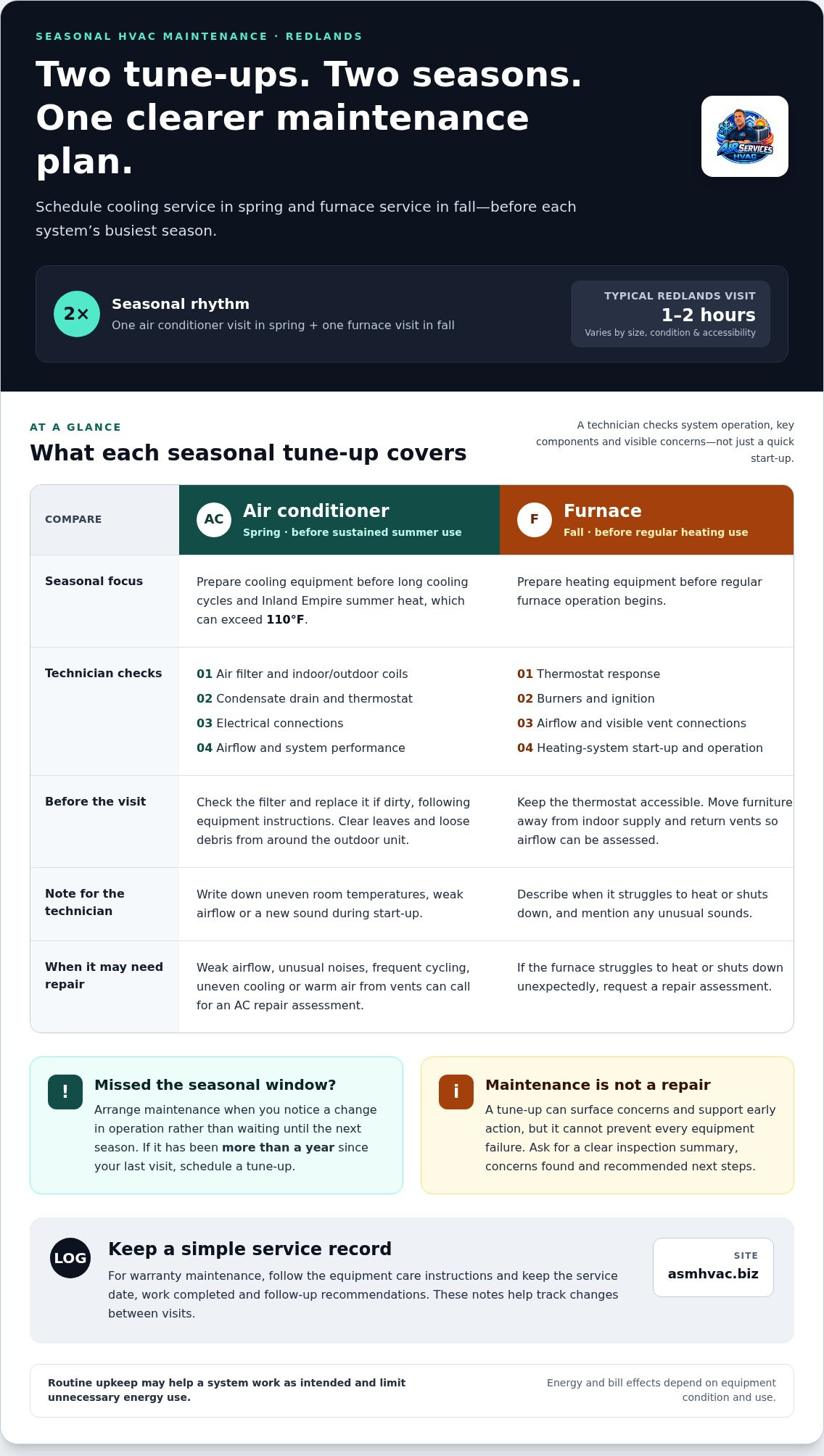
Air conditioner and furnace maintenance tasks
A tune-up should cover more than a quick start-up test. A useful inspection checks heating and cooling components, system operation, and visible wear.
Technician Inspection Tasks
During an AC tune-up, a technician can inspect the air filter, indoor and outdoor coils, condensate drain, thermostat, and electrical connections. They can also check airflow and system performance, then explain any readings or concerns. Ask what was inspected and which findings need attention. This helps distinguish routine maintenance from a repair recommendation.
For a furnace, a visit can include checking thermostat response, burners, ignition, airflow, and visible vent connections. The technician can run the heating system and report whether it starts and operates as expected. If it struggles to heat or shuts down, describe when that happens and mention any unusual sounds. Those details help guide the inspection.
Homeowner Maintenance Before a Tune-Up
Before the visit, check the air filter and replace it if it’s dirty, following the equipment instructions. Clear leaves and loose debris from around the outdoor unit, and move furniture away from indoor supply and return vents. Keep the thermostat accessible, too. These steps improve access and help the technician assess airflow and operation.
Write down changes you’ve noticed, such as uneven room temperatures, weak airflow, or a new sound during startup. Don’t attempt repairs as part of preparation. Share the observations during the appointment so the technician can focus the inspection. For professional preventive HVAC maintenance, schedule a tune-up and discuss the system’s specific findings.
Air Services HVAC: AC repair
Air Services HVAC provides AC repair when a tune-up identifies a fault that needs attention rather than routine maintenance. If your air conditioner still has weak airflow, unusual sounds, or inconsistent cooling after inspection, AC repair can address the underlying issue. Furnace repair is the next step when heating equipment fails to operate properly.
For homes that need a different setup, Air Services HVAC also installs and repairs ductless mini-split systems and provides HVAC installation. A technician can assess whether repair or a system change is the appropriate next step based on the equipment’s condition and the problem you’re experiencing.
When arranging service, share the symptoms and tune-up findings so the issue is clear from the start. Contact Air Services HVAC to discuss your HVAC needs in Redlands, keeping your system prepared for an effective AC tune up Redlands homeowners rely on.
Make Your Next HVAC Step Count
Use the inspection findings to decide what your system needs next. If the technician identifies a specific fault, address it rather than treating another tune-up as a substitute for repair. If the equipment is operating properly, keep the service notes so future visits can track changes and recurring concerns.
Planning an AC tune-up in Redlands is a practical way to keep track of your home’s comfort and equipment condition. Air Services Mechanical provides maintenance, repairs, and installation to help you act on the findings and choose a suitable next step for your heating or cooling system.
Contact Air Services HVAC today to discuss your HVAC needs. A clear account of what you noticed and what the technician found can make that conversation more useful, and help you move forward with confidence.
Frequently Asked Questions
Can a tune-up help lower my energy bills?
Yes, maintenance can help reduce energy use when it addresses issues affecting system operation. Restricted airflow, for example, can make an air conditioner work harder to cool a home. A tune-up gives a technician the opportunity to identify concerns that may be reducing efficiency. Actual energy use also depends on equipment condition, thermostat settings, home insulation, and how often the system runs.
Is an AC or furnace tune-up really necessary if everything seems to be working fine?
Yes. Normal operation doesn’t reveal every developing issue. A system may still heat or cool while a component is wearing or performance is changing. A scheduled inspection gives a technician a chance to assess the equipment before a small concern affects comfort. Keep track of unusual sounds, changes in airflow, or rooms that feel less comfortable than usual.
What happens if I skip a year of maintenance?
Missing a visit doesn’t mean a breakdown will happen, but wear and developing problems can go unnoticed. If you’ve missed maintenance, arrange a tune-up and share any changes you’ve observed, such as longer cooling cycles or a furnace that starts inconsistently. The technician can assess the system’s condition and explain which findings need attention first.
What's included in an A/C service?
For a home system, AC service generally involves discussing your concerns, inspecting the equipment, checking its operation, and explaining the findings. The technician can distinguish routine maintenance needs from a fault that calls for repair. Before the appointment, note when the problem occurs, such as during startup or after the system has been running for a while.
What does an AC tune-up in Redlands, CA include?
An AC tune-up in Redlands includes an assessment of the air conditioner’s condition and operation, followed by an explanation of any findings. Describe changes you’ve noticed, such as a room that no longer cools evenly or a thermostat that doesn’t seem to match the room’s comfort. Those observations help focus the inspection and clarify next steps.


