

If you're waiting for HVAC prices to drop or federal tax credits to return, you might be surprised to learn that equipment costs have climbed 40% since 2020 while those major 25C credits officially expired last December. It's a challenging time to manage home comfort, especially when Southern California electricity rates continue to climb and your current unit struggles to handle 100°F Redlands afternoons. You likely feel the pressure to upgrade but worry about making a costly mistake with changing regulations. Investing in a professional energy efficient HVAC installation is no longer just about staying cool; it's a strategic move to protect your home's value and your monthly budget.
We understand the frustration of uneven cooling in two-story homes and the confusion surrounding California’s 2026 Title 24 standards. This guide will help you choose the right high-efficiency system for your specific needs and ensure your investment pays off through precision installation and active local rebates from providers like LADWP or SoCalGas. We'll examine the transition to low-GWP refrigerants, the shift toward heat pumps as the state default, and the technical standards required to keep your home quiet and reliable for years to come.
Key Takeaways
- Learn why SEER2 and HSPF2 are the essential metrics for Southern California's climate and how they impact your cooling performance.
- Compare air-source heat pumps against traditional central air to find the most reliable solution for triple-digit Redlands summers.
- Discover how a professional energy efficient HVAC installation uses Manual J load calculations to prevent system short-cycling and high utility costs.
- Identify the "Efficiency Gap" and how precision workmanship ensures your high-efficiency system delivers its promised energy savings.
- Navigate the updated 2026 local rebate landscape to help offset the upfront costs of your home comfort upgrade.
Decoding Efficiency Ratings: SEER2, HSPF2, and the SoCal Climate
Understanding the technical side of an energy efficient HVAC installation starts with two acronyms: SEER2 and HSPF2. SEER2 is the updated industry standard for measuring cooling efficiency under real-world conditions. Unlike the older SEER rating, this newer metric accounts for the higher external static pressure found in modern ductwork, providing a more accurate picture of how a system will actually perform in your home. For homeowners in the Inland Empire, these SEER and HSPF efficiency ratings are the best tools for comparing long-term operating costs.
Our specific "Hot-Dry" Southwest climate requires equipment that can handle sustained triple-digit heat without losing capacity. While many systems are tested in moderate conditions, Redlands summers put extreme pressure on the condenser. High-efficiency units are designed with larger coils and more robust compressors to maintain performance even when the thermometer hits 110°F. Even though we focus on cooling, HSPF2 remains vital. Redlands winters often see temperatures drop into the 30s at night, making heating efficiency a significant part of your annual utility bill.
Why SEER2 is the New Standard for Redlands Homeowners
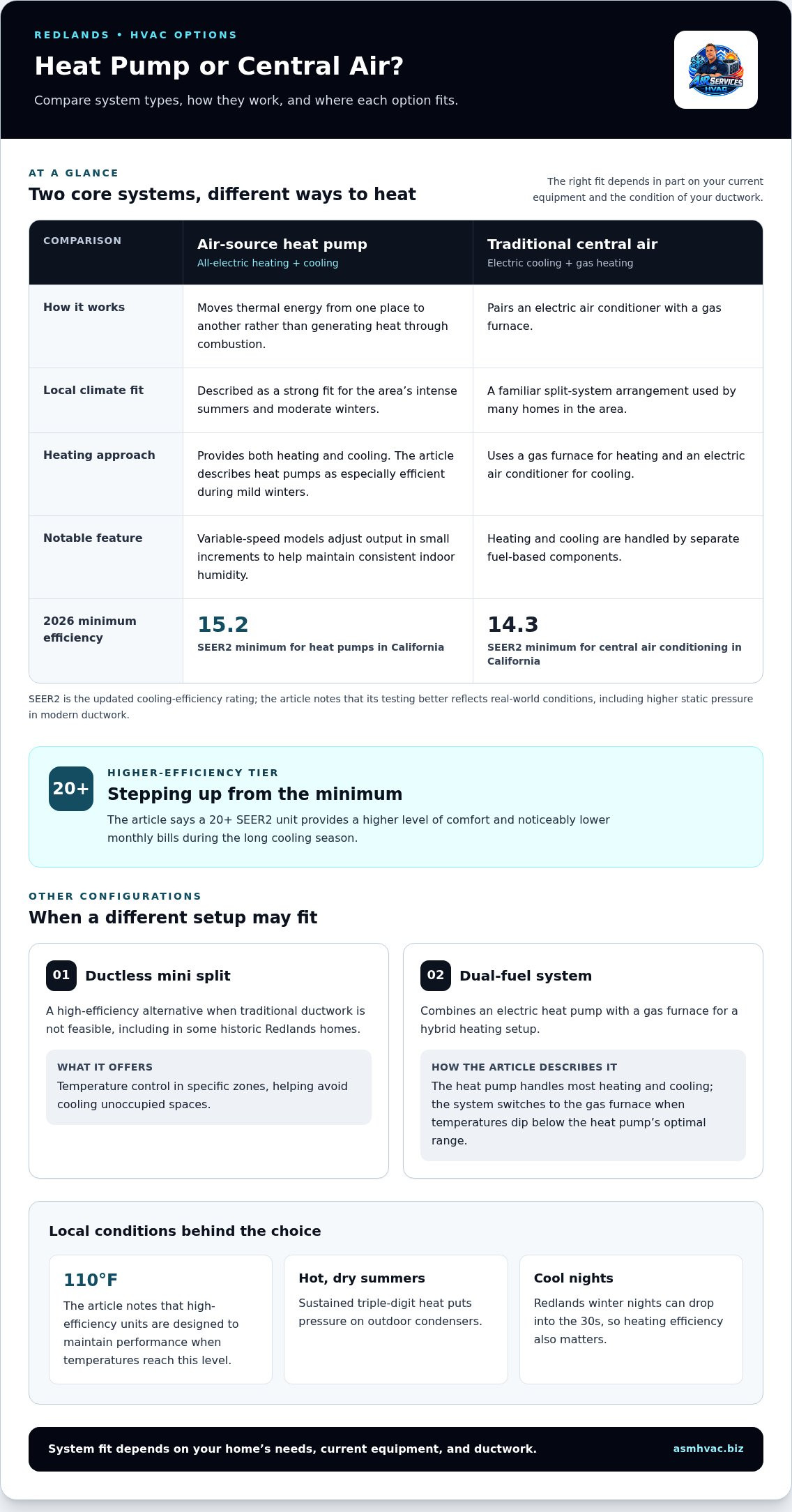
The shift to SEER2 involves more rigorous testing protocols that better reflect the actual environment of a Southern California home. As of 2026, California mandates a minimum of 14.3 SEER2 for central air conditioning and 15.2 SEER2 for heat pumps. A minimum-efficiency unit often struggles to keep up with the peak demand of a two-story home. Stepping up to a 20+ SEER2 unit provides a much higher level of comfort and noticeably lower monthly bills during our long cooling season.
The Role of ENERGY STAR Certification in 2026
Labels from the ENERGY STAR program are undergoing significant changes this year. The program is sunsetting the certification for central air conditioners in 2026, meaning you'll need to look closer at technical specs rather than just a blue sticker. For those sticking with gas heat, the new Version 5.0 standard for furnaces takes effect on July 31, 2026. Choosing a system that meets these updated benchmarks is often a requirement for accessing local utility rebates from providers like LADWP or SoCalGas. It's a reliable way to ensure you're investing in the top 25% of efficient products available today.
Comparing High-Efficiency Options: Heat Pumps vs. Central Air
Selecting the right equipment for an energy efficient HVAC installation requires balancing your home's layout with your long-term comfort goals. Most homes in our area utilize a traditional split system, which pairs a gas furnace with an electric air conditioner. However, the shift toward electrification has made air-source heat pumps a primary contender for Inland Empire residents. These systems don't generate heat through combustion. Instead, they move thermal energy from one place to another, which is far more efficient during our mild winters. When planning an energy efficient HVAC installation, the decision usually comes down to the age of your current unit and the condition of your existing ductwork. For homeowners also considering broader structural improvements, professional renovation firms like HMJ Contracting demonstrate how integrated upgrades can maximize a building's overall efficiency.
For owners of the beautiful historic properties in Redlands, traditional ductwork isn't always feasible. In these cases, ductless mini split systems offer a high-efficiency alternative that preserves the architectural integrity of the home. These units allow for precise temperature control in specific zones, which eliminates the energy waste of cooling unoccupied spaces. If you're unsure which path is right for your home, we can help you evaluate your current system's performance to see if a repair or a replacement is the more responsible investment.
Air-Source Heat Pumps: The All-in-One Efficiency Solution
Heat pumps are ideal for the moderate winters and intense summers we experience locally. Because they move heat rather than creating it, they achieve efficiency levels that combustion systems simply can't match. Modern units equipped with variable-speed compressors are particularly effective. They adjust their cooling output in tiny increments, which helps maintain consistent indoor humidity and prevents the "blast of cold air" followed by a warm period that single-stage units often produce.
Dual-Fuel Systems: The Best of Both Worlds
A dual-fuel system combines an electric heat pump with a gas furnace for ultimate reliability. During most of the year, the heat pump handles both cooling and heating duties with extreme efficiency. When temperatures occasionally dip below the heat pump's optimal range, the system automatically switches to the gas furnace. While certain federal tax credits for HVAC have shifted recently, these hybrid systems remain a top choice for maximizing local utility rebates while ensuring your home stays comfortable regardless of the weather.
Maximizing ROI Through Professional HVAC Installation
High-performance equipment is only half of the equation for a successful energy efficient HVAC installation. We often see the "Efficiency Gap" in local homes where a premium 20 SEER2 unit performs no better than a standard model because of improper setup. According to Department of Energy guidelines, quality installation is as critical as the hardware itself. Precision in duct sealing, refrigerant charge, and airflow balance determines whether you actually see the savings promised on the yellow EnergyGuide label.
Proper sizing is another cornerstone of long-term ROI. We use Manual J load calculations to determine the exact cooling needs of your home, accounting for insulation, window orientation, and local humidity levels. Oversized units are a common mistake; they cool the house too quickly and shut off before removing humidity, a process called short-cycling. This creates unnecessary wear on expensive components and leaves your home feeling clammy during the height of summer. Once your system is correctly sized and installed, committing to preventative HVAC maintenance services is the best way to protect those high-efficiency components from the dust and heat of the Inland Empire.
Why NATE Certification Matters for Your Investment
NATE-certified technicians have verified expertise in the complex electronics and refrigerants used in 2026 high-performance systems. This certification ensures that your energy efficient HVAC installation meets the manufacturer's strict specifications, which is often a requirement to keep your warranty valid. Professional handling during the setup process prevents the small errors, such as minor refrigerant leaks or incorrect fan speeds, that can lead to premature system failure and inflated utility bills.
Local Rebates and Incentives in San Bernardino County
While federal tax credits have shifted, significant savings are still available through local utility programs. Southern California Edison (SCE) and SoCalGas offer various tiered rebates for residents who upgrade to high-efficiency heat pumps or central air units. Navigating the paperwork for these incentives can be complicated, but a professional AC repair Redlands CA specialist can help document the installation and efficiency ratings required for eligibility. These local programs are designed to reward homeowners who choose to reduce their carbon footprint while improving their home's cooling reliability.
Securing Long-Term Comfort for Your Redlands Home
Navigating the 2026 landscape of HVAC regulations doesn't have to be overwhelming when you have a clear plan. By understanding SEER2 ratings and the specific benefits of modern heat pump technology, you're already ahead of the curve. The final step is ensuring that your equipment is matched with the precision it requires to function at peak performance. An energy efficient HVAC installation is a significant investment; it's one that pays dividends through lower utility bills and a more reliable home environment during our intense Southern California summers.
With over 20 years of local experience, our team provides the technical expertise needed to handle complex modern systems. Our NATE-certified and EPA-certified technicians focus on long-term results rather than quick fixes, ensuring your new system meets every manufacturer specification. We also offer 24/7 emergency service to give you total peace of mind regardless of the weather. Schedule your energy-efficient HVAC consultation with Air Services Mechanical today to start planning your upgrade. We're here to help you make an informed decision that keeps your home comfortable for years to come.
Frequently Asked Questions
How much can I actually save with an energy-efficient HVAC installation?
Savings vary based on your previous system's age, but switching to a high-efficiency model can reduce cooling costs by a significant margin during our long summer seasons. Modern heat pumps are particularly effective, often saving homeowners between $300 and $1,500 per year on heating and cooling compared to older gas furnace and central AC combinations. An energy efficient HVAC installation ensures these savings are realized by matching the unit's capacity perfectly to your home's square footage.
Will a high-efficiency HVAC system increase my home value in Redlands?
A new, documented HVAC system is a major asset that typically increases home value and marketability in the Inland Empire. Prospective buyers in Redlands specifically look for homes that can handle triple-digit heat without astronomical utility bills. A system that meets the 2026 California Title 24 standards offers peace of mind to buyers, signaling that the property is modern, well-maintained, and equipped for long-term energy savings. If you are also considering high-end exterior upgrades like custom gates or railings to further boost your home's value, you can learn more about Iron Guys.
What is the difference between SEER and SEER2?
SEER2 is the updated testing standard that replaced the original SEER rating to better reflect real-world operating conditions. The "2" indicates that the equipment was tested under higher external static pressure, which mimics the resistance found in actual residential ductwork. This provides a more accurate efficiency rating than the old laboratory-based metrics. It's the standard you should look for to ensure your energy efficient HVAC installation delivers the performance you expect.
Do high-efficiency HVAC systems require more maintenance than standard units?
High-efficiency systems require the same frequency of maintenance as standard units, but the precision of that service is more important. These systems rely on sensitive variable-speed compressors and advanced electronic sensors that must remain clean to operate at peak specs. Professional preventative care protects these high-performance components from the dust and heat of San Bernardino County, ensuring the system remains quiet and reliable throughout its service life.


