
Cold air from your furnace doesn’t always mean the system has failed, but it is a signal worth checking. If your home isn’t warming as expected, a safe furnace blowing cold air fix may be as simple as changing the thermostat fan from “ON” to “AUTO” or checking a clogged filter. Before trying anything, note whether the air is cool only briefly at startup or remains cold throughout the heating cycle.
Start with simple, reversible thermostat and airflow checks, then pay attention to symptoms that may point to a furnace fault. This guide explains which checks you can make safely and why issues involving gas, electrical components, or internal parts should be left to a qualified technician. If the problem remains, Air Services HVAC’s NATE-certified technicians provide furnace diagnosis and repair in Redlands and listed Inland Empire communities, with honest recommendations.
Key Takeaways
- Notice whether cold airflow is brief at startup or continues through the heating cycle. The timing helps guide your next step.
- For a furnace blowing cold air fix, check the thermostat mode, temperature, and fan setting, then inspect the filter and follow its replacement instructions.
- Stop troubleshooting if you notice a gas odor, smoke, or concerning electrical signs, and seek qualified help.
- If cold air persists after basic checks, arrange professional furnace diagnosis and repair in Redlands or listed Inland Empire communities.
Why Is Your Furnace Blowing Cold Air? Start by Identifying the Pattern
Cold air from the vents can make it hard to tell whether your furnace is warming up or failing to heat your home. A brief stretch of cooler airflow at startup is different from air that stays cold throughout the heating cycle. Observe the pattern and check whether the thermostat reaches its set temperature before deciding what to do next.
The symptom alone doesn’t identify a failed part. A thermostat setting, restricted airflow, or an equipment issue could each affect how the system behaves. A specific cause can’t be confirmed without proper diagnosis. For a general overview of furnace operation and components, see How a Furnace Works.
This video offers additional context on furnace troubleshooting:
Does the furnace blow cold air continuously or only at startup?
Note when the air turns cold: right as the furnace starts, after it has been running, or throughout the cycle. Check whether the thermostat’s set temperature is above the current room temperature and whether the furnace eventually warms the room. A short startup pattern differs from persistent cold airflow, which means the system isn’t meeting the heating demand and needs further attention.
These observations can help you describe the issue, but they don’t establish the cause. Cold air from the vents could relate to settings or airflow, while a persistent symptom may involve the furnace itself. Don’t assume a particular part has failed based only on how the air feels. The right furnace blowing cold air fix depends on the system’s behavior and, if the problem continues, professional diagnosis.
Furnace Blowing Cold Air Fix: Safe Thermostat and Airflow Checks
A safe furnace blowing cold air fix starts with checks you can make without opening or handling the furnace. Work through these steps in order. Stop if you notice a gas smell, smoke, or an unusual burning odor.
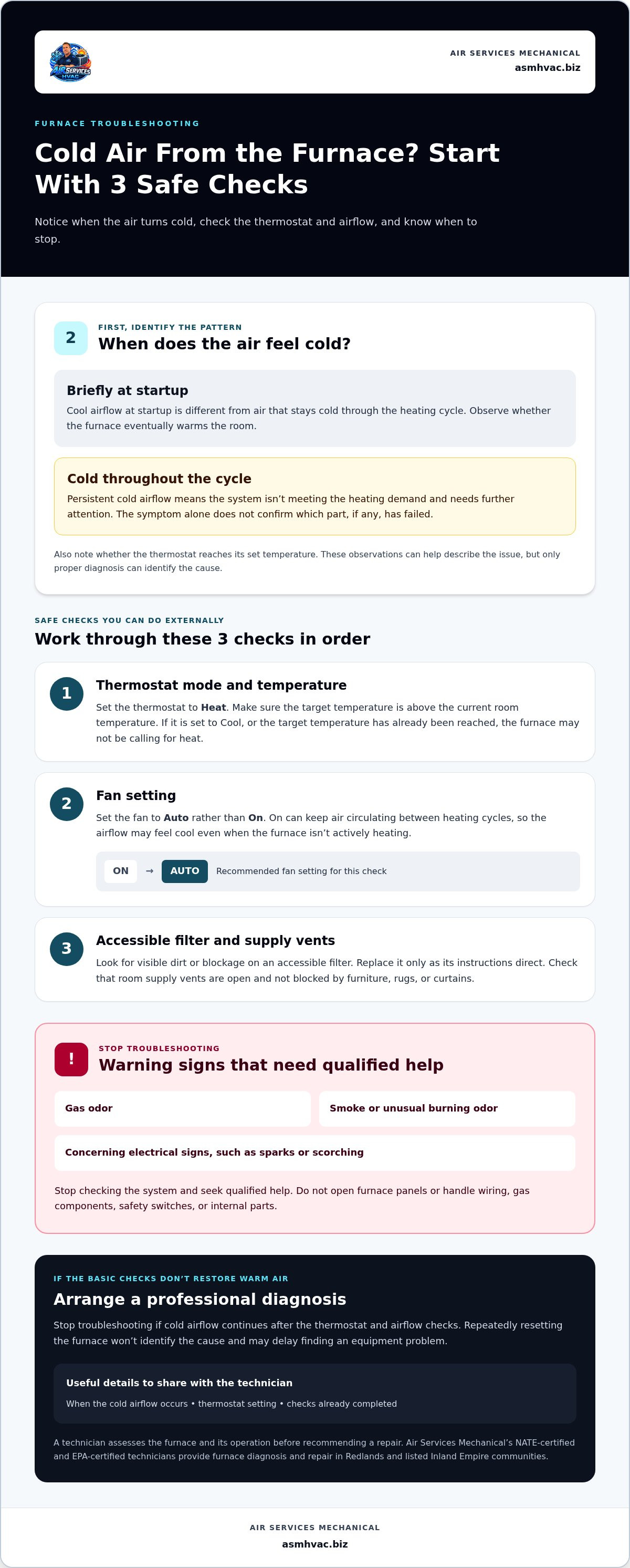
- Check the thermostat mode and temperature. Set it to Heat and make sure the target temperature is above the current room temperature. If it’s set to Cool or the target temperature has already been reached, the furnace may not be calling for heat.
- Confirm the fan setting. Set the fan to Auto rather than On. The On setting can keep air circulating between heating cycles, making the airflow feel cool even when the furnace is not actively heating.
- Inspect the filter and supply vents. If the filter is accessible, look for visible dirt or blockage and replace it only as its instructions direct. Check that room supply vents are open and not blocked by furniture, rugs, or curtains.
Which furnace checks can homeowners safely do themselves?
Keep your checks external: use the thermostat controls, inspect only an accessible filter, and make sure room vents are clear. Don’t open furnace panels or handle wiring, gas components, or safety switches. These parts need qualified attention, and attempting to adjust them yourself can create additional hazards.
If you smell gas, see smoke, or notice an unusual burning odor, stop checking the system and seek qualified help rather than trying another setting or reset. If the thermostat and airflow checks don’t restore warm air, professional diagnosis can identify the cause without guesswork. Air Services Mechanical provides professional furnace repair in Redlands and listed Inland Empire communities.
When to Stop Troubleshooting and Arrange Furnace Repair in Redlands
If cold airflow continues after the basic thermostat and airflow checks, stop troubleshooting and arrange professional diagnosis. Repeatedly resetting the furnace won’t identify the cause and may delay finding an equipment problem. Make a note of what you checked and when the symptom occurs. That information can help the technician understand the issue.
Some signs mean you should stop immediately. A gas odor, smoke, or concerning electrical signs such as sparks or scorching call for qualified help, not further testing. Don’t open the furnace or attempt to adjust internal parts. A safe furnace blowing cold air fix depends on identifying the underlying cause, which requires an assessment of the system.
What happens during a professional furnace diagnosis?
A technician will listen to your description of the symptom and assess the furnace and its operation before recommending a repair. The goal is to find what is affecting heat delivery rather than guess based on cold air alone. Air Services Mechanical’s NATE-certified and EPA-certified technicians provide furnace diagnosis and repair in Redlands and listed Inland Empire communities, with honest recommendations.
For more context on arranging service locally, see our furnace repair guide for San Bernardino. If your system still isn’t heating after safe checks, you can request an online estimate for furnace service. Include the airflow pattern, thermostat setting, and checks you’ve already completed to give the team a clear starting point.
Take the Next Step Toward Reliable Heat
If the furnace still isn’t heating after your safe checks, a clear diagnosis can help you decide what to do next without guesswork. Air Services Mechanical brings over 20 years of industry experience to furnace repair, with NATE-certified and EPA-certified technicians and 24/7 contact availability.
You don’t need to keep searching for a furnace blowing cold air fix or repeatedly restart a system that isn’t warming your home. Share what you’ve noticed and arrange a professional assessment. Request an online estimate for furnace service from Air Services Mechanical in Redlands to take a straightforward next step toward restoring heat.
Frequently Asked Questions
Can a dirty furnace filter make the air feel cold?
Yes. A dirty filter can restrict airflow and contribute to furnace operating problems, but it doesn’t confirm that the filter is the only cause. Check the filter’s instructions and the furnace manual before replacing it, since the correct filter and replacement method can vary by system. If the furnace blowing cold air fix isn’t clear after this check, arrange a professional diagnosis.
Is it normal for a furnace to blow cold air when it first starts?
Air may feel cool briefly as the system starts, but don’t dismiss airflow that stays cold as normal. Check that the thermostat is set to Heat and the fan is set to Auto, then observe whether the air warms and the room reaches the selected temperature. If the room remains chilly, have the furnace assessed rather than assuming the problem will correct itself.
What should I do if my furnace smells like gas while blowing cold air?
Stop troubleshooting and leave the area if you smell gas. Don’t operate light switches or other electrical controls, use a flame, or inspect furnace components. From a safe location, contact the appropriate emergency utility or emergency service. Don’t use the furnace again until a qualified professional has assessed it and advised that it’s safe to operate.
When should I call an HVAC technician for a furnace blowing cold air?
Arrange professional help if cold airflow continues after basic checks, the furnace repeatedly stops, or you notice smoke, a gas odor, or an unusual burning smell. Avoid opening the unit or adjusting internal parts. In Redlands, Air Services Mechanical can assess the system, identify the cause, and explain the recommended furnace repair so you can make an informed decision about what to do next.


