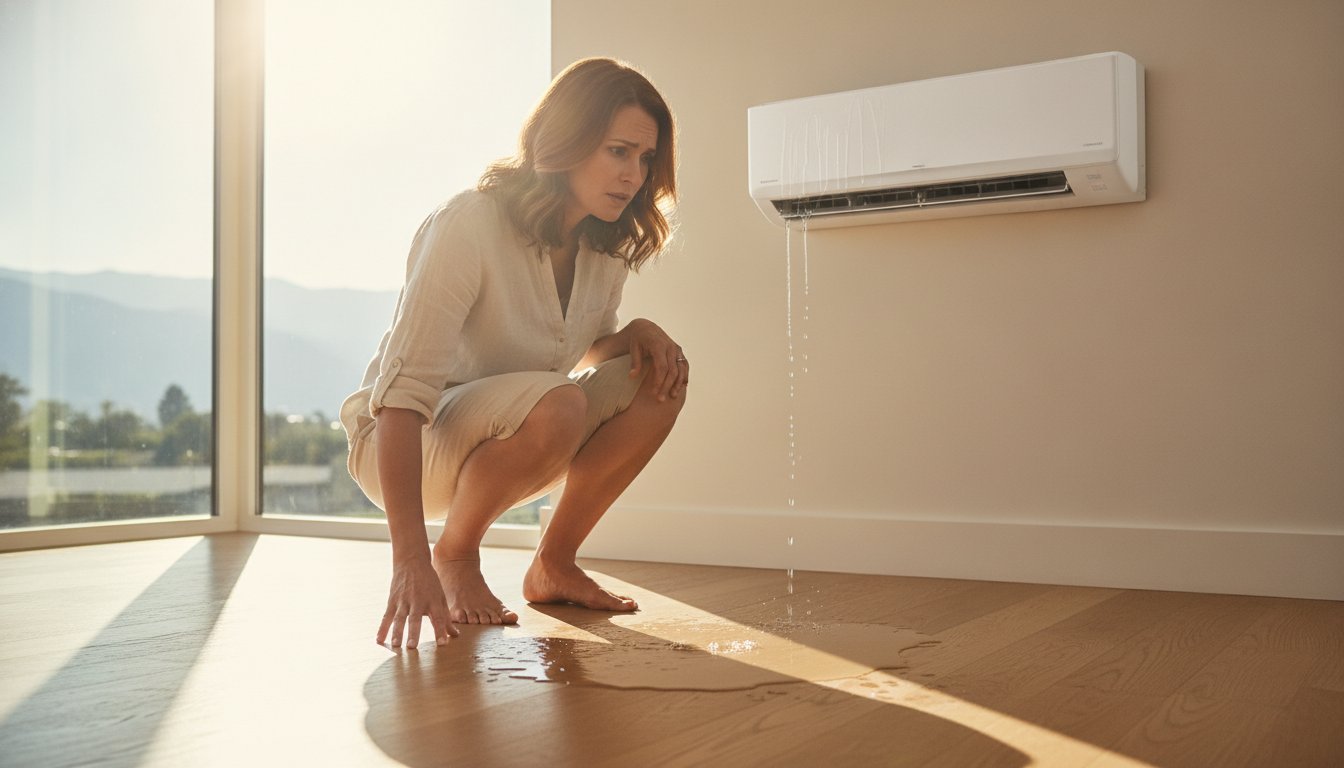
Finding a puddle of water under your indoor unit during a triple-digit Inland Empire afternoon is more than a nuisance. It is a race against time to save your drywall and flooring from permanent damage. If you are dealing with an AC leaking water inside Redlands, your first instinct is likely to shut the system off and worry about the potential repair bill. You are right to be concerned, as even a small drip can lead to mold or structural issues if left unaddressed during our humid summer stretches.
We understand the stress that comes with home maintenance, especially when the comfort of your family is at stake. This guide is designed to provide you with a clear, logical path toward a dry home and a functional cooling system. You will learn the primary causes of indoor leaks, from simple blockages to more complex mechanical failures. We will also help you determine if a quick cleaning will solve the problem or if you need a C-20 licensed professional to handle a more technical repair. By the end of this article, you will have the information needed to stop the leak and ensure your system is running efficiently again.
Key Takeaways
- Understand how your evaporator coil manages moisture and why a drainage failure is often the root cause of indoor puddles.
- Identify the most common culprits behind an AC leaking water inside Redlands, ranging from clogged condensate lines to rusted primary drain pans.
- Learn the two immediate steps every homeowner should take to stop water production and protect flooring from expensive moisture damage.
- Discover how routine preventative maintenance and regular filter changes can eliminate the majority of indoor water leak emergencies.
- Gain clarity on when a simple cleaning is sufficient versus when a NATE-certified professional is required to handle technical repairs.
Understanding the Source: Why AC Units Create Water
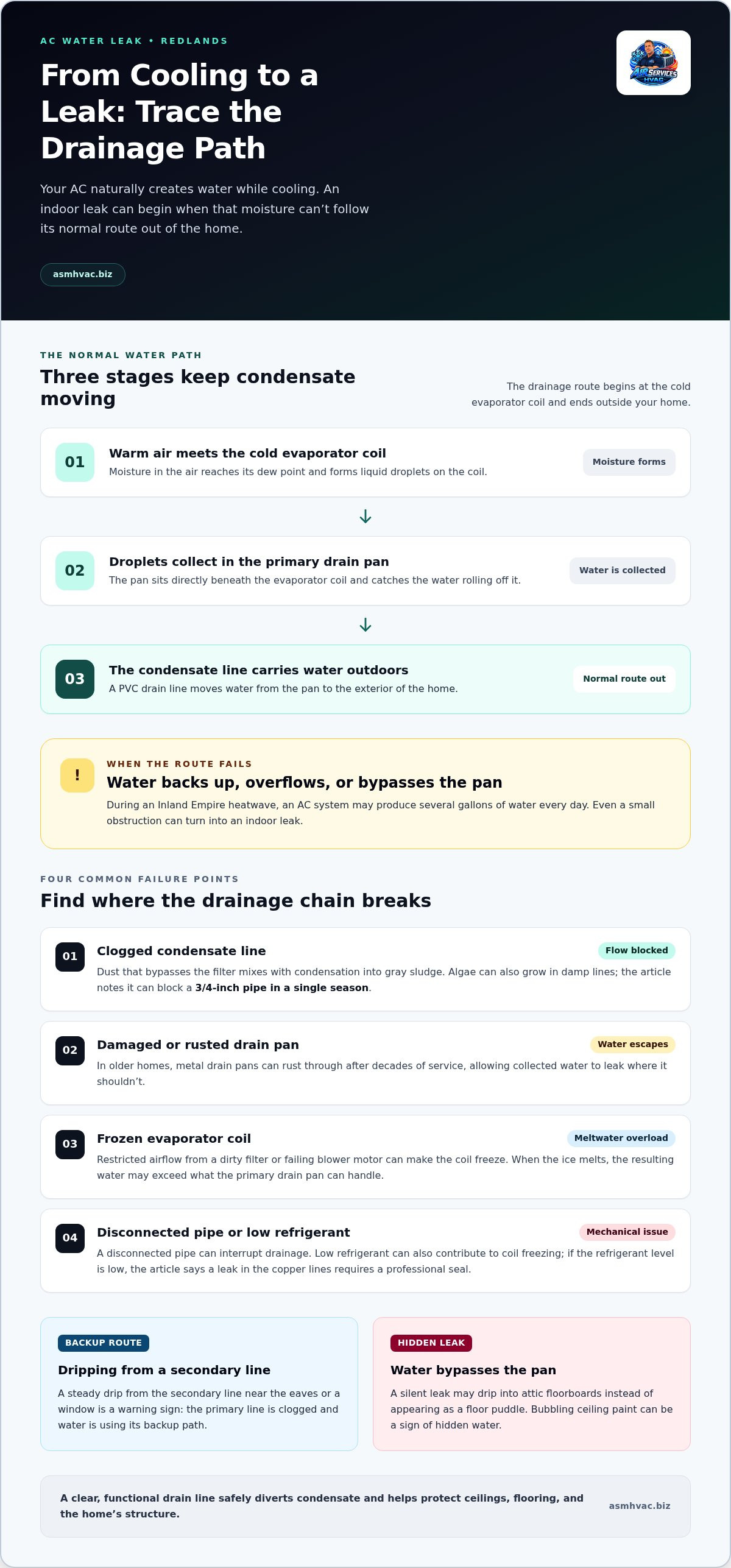
Your air conditioner does more than just lower the temperature of your home; it acts as a powerful dehumidifier. As the system pulls warm air from your living space, it passes that air over a cold evaporator coil. This process relies on the fundamental physics of how air conditioners create water through the vapor-compression cycle. When the warm air hits the cold metal of the coil, the moisture in the air reaches its dew point and transforms into liquid droplets.
In a properly functioning system, these droplets roll down the coil and collect in a primary drain pan located directly underneath. From there, the water should travel through a PVC pipe, known as the condensate drain line, to the exterior of your home. However, when this path is blocked or the pan is damaged, you end up with an AC leaking water inside Redlands homes. During an Inland Empire heatwave, your system may produce several gallons of water every day, meaning even a small obstruction can quickly lead to a major indoor flood.
The Role of Humidity in the Inland Empire
While Redlands is known for its dry heat, the air still contains enough moisture to impact your HVAC system. During late summer, "monsoon moisture" often pushes humidity levels higher than usual. This extra moisture forces your evaporator coil to work overtime to keep your indoor environment comfortable. A clear, functional drain line is the only thing standing between a comfortable home and a water-damaged ceiling. If the humidity isn't effectively removed and diverted, your indoor air will feel "sticky," and the risk of a backup increases significantly.
Normal vs. Abnormal: When to Worry
It's helpful to know where water should be. Most homes in our area have a secondary drain line that exits through the eaves or near a window. Seeing a steady drip here is actually a warning sign; it means your primary line is clogged and the system is using its backup path. In contrast, a "silent leak" is much more dangerous. This occurs when water bypasses the pan and drips directly into your attic floorboards. You might not see a puddle on the floor, but you may notice bubbling paint on the ceiling. If you find an AC leaking water inside Redlands property, it's a sign the normal drainage path has failed. Condensate is the liquid byproduct of the refrigeration cycle that must be safely diverted to prevent these structural issues.
Common Culprits: Why Your AC Is Leaking Inside Your Redlands Home
Identifying the root cause of a leak is the first step toward a permanent fix. While there are several common reasons for an AC leaking water, the specific age and layout of your home often dictate which issue is most likely. Redlands features a unique blend of historic Victorian architecture and modern developments, each presenting different challenges for HVAC drainage. In older homes near the city center, systems are often retrofitted into tight attic spaces where metal drain pans can rust through after decades of service. In newer builds, we frequently see issues with improperly pitched PVC lines that don't allow water to flow out by gravity alone.
Regardless of your home's age, an AC leaking water inside Redlands usually stems from one of four primary failures. These include clogged condensate lines, damaged pans, frozen evaporator coils, or disconnected pipes. When these components fail, water has nowhere to go but through your ceiling or into your flooring.
The "Redlands Special": Dust and Algae Clogs
Dust is a constant reality in the Inland Empire. When fine particles from our dry, windy days bypass your filter, they mix with the condensation on your coil to create a thick, gray sludge. This mixture eventually flows into your drain line and acts like a cork. Because our attics reach extreme temperatures, these damp lines also become breeding grounds for algae. This biological growth can block a 3/4-inch pipe in a single season. Investing in preventative HVAC maintenance services is the best way to flush these lines before the summer heat peaks.
Frozen Coils and Refrigerant Issues
A block of ice on your indoor unit is a clear sign of trouble. When airflow is restricted by a dirty filter or a failing blower motor, the evaporator coil drops below freezing. The condensation on the coil turns to ice, and as that ice eventually melts, it produces a volume of water that the primary drain pan simply isn't built to handle. Low refrigerant levels can also cause this freezing effect. It's a common mistake to assume a system just needs more refrigerant; if the level is low, there is a leak in the copper lines that requires a professional seal. If you suspect your system is low on charge, you should consult a local AC repair expert to perform a leak test rather than just adding more gas.
Immediate Steps: What to Do When You Find a Leak
Discovering an AC leaking water inside Redlands homes can be a stressful experience, but acting quickly prevents a minor drip from becoming a major structural repair. Your immediate priority is to follow a strict shut-off protocol to stop the moisture at its source. Go to your thermostat and turn the system to "Off" rather than just raising the temperature. This stops the cooling cycle and prevents the evaporator coil from producing any more condensation. If you leave the system running while it's leaking, you risk saturating your ceiling joists or ruining expensive hardwood flooring.
Once the system is off, focus on moisture mitigation. Use a shop-vac to suck up standing water from the drain pan or the floor. If you don't have a vacuum, use heavy towels to blot the area dry. Removing standing water is the only way to prevent mold growth and wood rot in our warm Inland Empire climate. After the area is dry, check your air filter. A heavily soiled filter restricts airflow, which often causes the coil to freeze. If you see ice on the copper lines, leave the system off to let it thaw naturally; never try to scrape the ice off manually.
Before calling for help, take a moment to inspect the primary drain pan for visible cracks or rusted holes. If the pan is full of water, the blockage is likely in the drain line itself. According to this official government resource, regular attention to these drains is vital for system health. If a simple filter change doesn't stop the water, it's time to contact a licensed Redlands HVAC professional to diagnose the internal failure.
Safety First: Electricity and Water
Water and electricity are a dangerous combination. If your indoor unit is located in a closet or attic and is actively "raining" onto electrical components like the blower motor or circuit board, do not touch the unit. Instead, go to your home's main electrical panel and shut off the dedicated HVAC breaker. This completely removes power from the system and eliminates the risk of a short circuit or electrical fire. Most modern systems include a "float switch," which is a safety device designed to shut the system down automatically if it detects a backup. If your system has stopped running on its own, this switch may have already saved you from a much larger flood.
Documenting for Insurance
If the leak has caused visible damage to your drywall or flooring, documentation is essential. Take clear, well-lit photos of the puddle, the unit itself, and the affected areas of your home. Identifying the "point of origin" for the leak helps both your technician and your insurance adjuster understand the scope of the claim. We also suggest keeping all repair receipts and maintenance records. Proving that your system was professionally maintained can be a deciding factor in whether an insurance company honors a water damage claim.
Preventing Future Water Damage in Your HVAC System
The most effective way to handle a leak is to ensure it never starts. In our local climate, preventative measures are not just suggestions; they are essential for protecting your property. By staying ahead of common drainage issues, you can avoid the stress and expense of an AC leaking water inside Redlands homes. Most water damage incidents we see are entirely preventable with a combination of consistent homeowner habits and professional technical oversight. Investing in a regular maintenance schedule is significantly more affordable than a single emergency AC repair in Redlands CA.
A primary defense against water backups is a professional "flush and brush" of the condensate system. During this process, a technician clears the entire length of the drain line and scrubs the primary pan to remove the biological "sludge" mentioned earlier. This single service prevents approximately 90% of emergency water leaks. Additionally, we recommend installing a secondary safety float switch. This small device acts as an automated sentry; if it detects water rising in the pan, it immediately kills power to the system, stopping water production before it can overflow onto your ceiling. For added peace of mind, remote monitoring and alert systems from inTouch R&B can notify you of these issues instantly, providing an extra layer of protection for your home's critical equipment.
Homeowner Maintenance Tasks
Redlands dust is relentless, and it is the leading cause of restricted airflow. You should change your high-efficiency filters every 30 to 90 days depending on your household's activity level and pet ownership. Beyond filters, you can perform basic line maintenance. If you notice the exterior end of your condensate line is dripping slowly, you can safely use a wet/dry shop-vac to clear out loose debris from the outside. While many online guides suggest using bleach to kill algae, we advise against it. Bleach can degrade PVC glue and damage plastic drain pans over time. Instead, stick to professional-grade treatments or a simple vinegar rinse to keep the line clear between service visits. Make it a habit to check your attic or closet unit during the first major heatwave of the year to catch any small drips before they escalate.
Upgrading Your System Protection
Modern HVAC technology offers several upgrades that provide peace of mind. An "EZ Trap" is a clear, U-shaped pipe that allows you to visually inspect the water flow without taking the system apart. It often includes a built-in brush for easy cleaning. If your unit is located on an upper floor, an auxiliary drain pan is a must-have. This secondary metal tray sits under the entire unit and provides an extra layer of protection should the primary pan fail. Finally, remember that the initial installation quality matters. Our NATE-certified technicians ensure that every drain line is pitched correctly, as even a slight upward tilt can cause water to pool and stagnate. To keep your system in top condition, schedule your preventative maintenance with our local team today.
Professional AC Leak Repair in Redlands: The ASM Advantage
When you are facing an AC leaking water inside Redlands home, you need more than a temporary fix. You need a technician who understands the specific mechanical stresses placed on cooling systems in the Inland Empire. Air Services Mechanical brings over 20 years of local experience to every service call. We have built our reputation on being the "dependable veteran" in the community, a team that prioritizes long term results over quick, superficial repairs. Our approach is straightforward and honest; we provide clear explanations of the problem and transparent pricing before any work begins.
Technical competence is the foundation of our service. Every member of our team is NATE certified and EPA certified, ensuring they have the specialized training required to handle modern refrigerants and complex drainage systems. We don't just treat the symptom of a puddle on the floor; we look at the entire refrigeration cycle to ensure your system is operating at peak efficiency. This level of dedication to mechanical integrity is similar to the expertise provided by Ms. Hydraulics LLC for heavy equipment and hydraulic systems. This professional rigor is why Redlands homeowners have trusted us for two decades to keep their homes dry and their air cold during our most intense summer heatwaves.
Why Local Expertise Matters
Redlands is unique because of its architectural diversity. A home in the historic downtown district requires a different technical approach than a modern build in the newer developments. We understand the specific plumbing and HVAC layouts common in older Victorian homes, where retrofitted systems often face unique drainage challenges due to tight spaces and legacy construction. As a locally owned and operated business, we view our customers as neighbors. We are committed to the San Bernardino community and aim to make the repair process as stress-free as possible through quiet confidence and professional reliability.
Our Comprehensive AC Diagnostic
A simple clog is often a sign of a deeper issue. During our diagnostic process, we go beyond just clearing a pipe. Our technicians perform a thorough inspection of the entire condensate system. We check the integrity of the primary and secondary drain pans, evaluate the cleanliness of the evaporator coil, and verify that your refrigerant levels are within the manufacturer's specifications. If a leak is caused by a frozen coil, we find out why that freezing occurred in the first place, whether it's a failing blower motor or a subtle airflow restriction. This methodical approach ensures that once we leave, the problem won't return next week. Contact Air Services Mechanical today for a professional AC leak diagnosis in Redlands.
Secure Your Home Against HVAC Drainage Failures
An indoor leak doesn't have to result in a major home renovation or expensive drywall repairs. By understanding how your system creates condensation and following a strict shut-off protocol, you can effectively manage an AC leaking water inside Redlands before it damages your property. Most drainage issues stem from simple blockages or neglected maintenance that can be resolved with a professional cleaning of your lines. Taking these steps early prevents minor drips from escalating into structural mold or wood rot. It's a small investment of time that saves thousands in potential restoration costs.
Whether you are dealing with a rusted pan in a historic home or a clogged line in a modern build, professional intervention ensures the root cause is addressed correctly the first time. Our team brings over 20 years of local experience and NATE-certified expertise to every diagnostic visit. We provide straightforward, honest solutions designed for long-term results rather than quick fixes. If you discover a leak at an inconvenient hour, our 24/7 emergency service is available to restore your peace of mind. Schedule Your Professional AC Leak Repair with ASM Today and let our seasoned technicians protect your home and your indoor comfort.
Frequently Asked Questions
Is an AC leaking water inside an emergency?
Yes, water leaking inside your home is considered a situational emergency because of the risk to your property. While it is not usually life-threatening, the moisture can quickly ruin drywall, insulation, and expensive flooring. If the leak occurs near electrical components like the blower motor, it also poses a fire hazard. Shutting the system off immediately is the best way to prevent these secondary issues from escalating into a much larger restoration project.
Can I still run my AC if it is leaking water?
You should not run your air conditioner while it is actively leaking. Running the unit continues the refrigeration cycle, which generates more condensation and worsens the flood. Turning the system off at the thermostat is the first step in managing an AC leaking water inside Redlands homes. This pause allows you to dry the area and prevents further structural damage while you wait for a professional technician to arrive and diagnose the failure.
How much does it cost to fix an AC water leak in Redlands?
The cost to repair a leak varies significantly based on the underlying cause. A simple drain line flush is generally the most affordable fix, while replacing a rusted drain pan or a frozen evaporator coil requires more labor and materials. A professional technician will provide a detailed estimate after a diagnostic inspection. Factors like system age, the difficulty of accessing the unit, and the specific parts required will influence the final repair total for your home.
Why is my AC leaking water even when it is turned off?
If your unit continues to leak after being turned off, it is usually because a frozen evaporator coil is beginning to thaw. The ice that formed on the coil while the system was running melts into the drain pan, which may already be overflowing or clogged. This thawing process can take several hours to complete. Keep towels or a shop-vac handy to manage the runoff as the ice block completely liquefies and drains out of the system.
How do I find the condensate drain line on my unit?
The condensate drain line is typically a 3/4-inch PVC pipe connected to the side of your indoor air handler or furnace. It carries water from the internal drain pan to the exterior of your home. You can often identify it by following the pipe that leads from your unit through a wall or into a floor drain. Some systems also have a secondary line that exits through an outdoor eave, which only drips when the primary line is blocked.
Can a dirty air filter really cause a water leak?
A dirty air filter is one of the most common causes of indoor water leaks. When the filter is clogged with dust and Inland Empire pollen, it restricts the airflow needed to keep the evaporator coil warm. As a result, the coil temperature drops below freezing and creates a thick layer of ice. When that ice eventually melts, the volume of water often exceeds the capacity of the drainage system and spills into your living space.
What happens if I ignore a small AC leak?
Ignoring even a minor drip can lead to significant long-term problems. Constant moisture creates the perfect environment for mold and mildew to grow within your walls or attic. Over time, this water can also rot wooden joists and cause ceilings to sag or collapse. Addressing an AC leaking water inside Redlands early is always less expensive than dealing with structural restoration and professional mold remediation later in the year.
Does homeowner’s insurance cover AC water damage?
Homeowner’s insurance policies typically cover the damage caused by a sudden water leak, such as ruined flooring or drywall. However, they usually do not cover the cost of repairing the air conditioner itself if the leak was caused by a lack of routine maintenance. You should review your specific policy or speak with your insurance agent to understand your coverage limits and deductible requirements for HVAC-related incidents. Keeping maintenance receipts can help support your claim if damage occurs.


