A furnace repair shouldn't feel like a high-stakes negotiation where you're forced to choose between your comfort and your budget. When your heating system begins to struggle during a Yucaipa winter, the immediate stress of finding a trustworthy professional often outweighs the chill in the air. You might find yourself searching for furnace repair Yucaipa services while worrying about hidden fees or contractors who simply don't show up when they say they will.
We believe that every homeowner deserves a safe, warm environment without the headache of high-pressure sales tactics or confusing technical jargon. It's frustrating to face unpredictable heating costs or the silent fear of a carbon monoxide leak. This article provides a straightforward diagnostic checklist to help you identify what's actually wrong with your system. We'll also guide you through the process of selecting a dependable technician and explain how the latest 2026 efficiency regulations impact your repair versus replace decision. By the end, you'll have the tools to ensure your home stays comfortable and your investment remains protected.
Key Takeaways
- Identify common furnace red flags, such as strange banging or whistling sounds, and learn which basic checks can save you an unnecessary service call.
- Find out how to verify technical credentials like NATE and EPA certifications to ensure you're working with a reliable professional for furnace repair Yucaipa.
- Understand the step-by-step breakdown of a standard service call so you can confidently discuss repair options without the pressure of hidden fees.
- Discover the 90-day rule for air filters and other maintenance habits tailored to Yucaipa's specific climate and air quality.
The Yucaipa Furnace Symptom Checklist: Is It Time for a Repair?
Identifying a problem before your home loses heat completely is essential for your peace of mind. Understanding how a furnace works allows you to monitor its performance with confidence. When you know the baseline for your system, you can spot the subtle shifts that indicate a professional furnace repair Yucaipa is necessary. Early detection often prevents a minor mechanical glitch from turning into a total system failure during a cold snap.
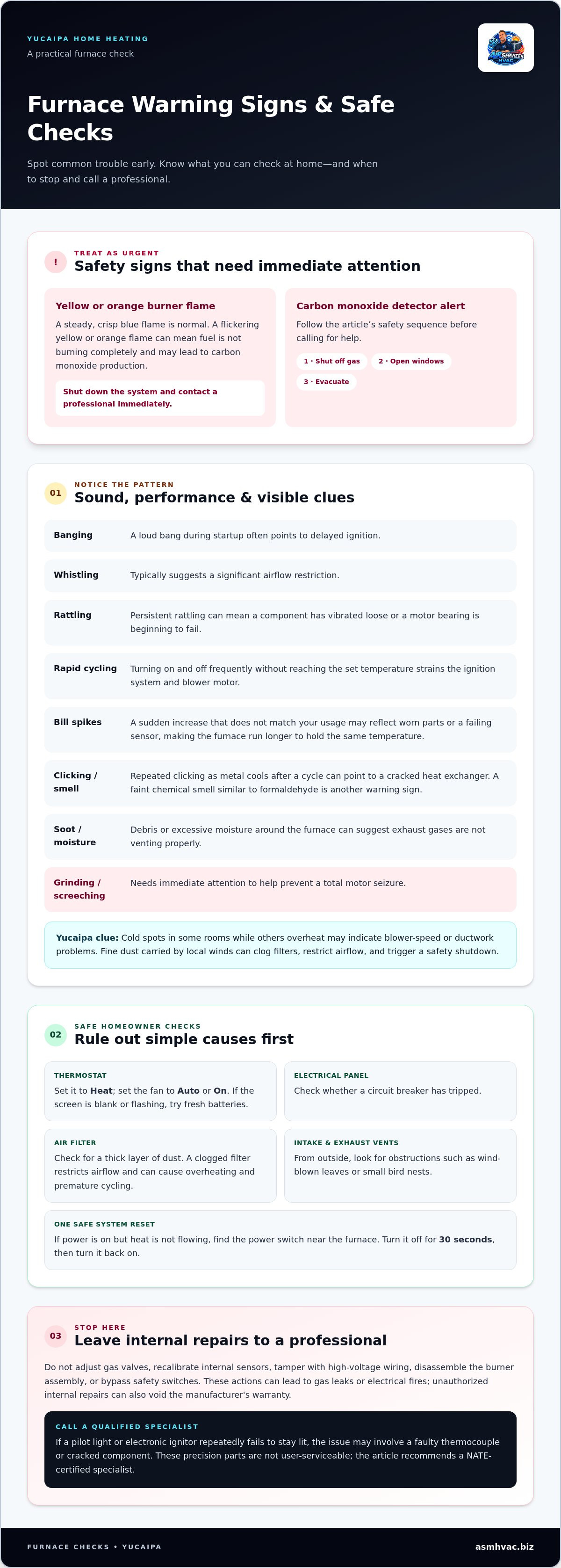
Mechanical sounds are often the first sign of trouble. Pay close attention to unusual noises like banging, whistling, or rattling coming from the attic or utility closet. A loud bang during startup often points to delayed ignition, while whistling typically suggests a significant airflow restriction. If you notice a persistent rattling, it usually means a component has vibrated loose or a motor bearing is beginning to fail. These sounds aren't just annoying; they are clear indicators that the system is under physical stress.
Your monthly expenses provide another layer of diagnostic data. Monitor your energy bills for sudden spikes that don't align with your actual usage. When a furnace loses efficiency due to worn parts or a failing sensor, it must run longer to maintain the same temperature. This increased runtime shows up directly on your utility statement. Similarly, check for frequent cycling where the furnace turns on and off rapidly without reaching the set temperature. This "short cycling" places immense strain on the ignition system and blower motor.
Safety should always be your top priority. Observe the color of your burner flame through the inspection window. A steady, crisp blue flame is normal and indicates clean combustion. A flickering yellow or orange flame is a dangerous red flag. This color change suggests the fuel isn't burning completely, which can lead to the production of carbon monoxide. If you see a yellow flame, you should shut down the system and contact a professional immediately.
Visual and Auditory Warning Signs
A cracked heat exchanger is one of the most serious issues a homeowner can face. You can often identify this by a repetitive clicking sound that occurs as the metal cools down after a cycle. You might also notice a faint, chemical smell similar to formaldehyde. Beyond sounds, look for physical debris. Soot or excessive moisture around your furnace is a red flag for Yucaipa homeowners, as it suggests the exhaust gases aren't venting properly. While a soft hum or the sound of air moving through ducts is normal, any grinding or screeching requires immediate attention to prevent a total motor seizure.
Performance Issues in Foothill Climates
Yucaipa's cooler night temperatures demand a responsive thermostat and clean sensors to keep your home comfortable. If you notice significant cold spots in specific rooms while others are overheating, it may indicate a problem with the blower's speed or the ductwork's integrity rather than a total system failure. These imbalances are often exacerbated by the local geography and wind patterns. Fine dust carried by local winds can quickly clog furnace filters, restricting airflow and triggering a safety shutdown.
DIY Troubleshooting vs. Professional Furnace Repair
Not every heating hiccup requires a technician on your doorstep, but knowing where to draw the line is essential for your safety. Before you search for furnace repair Yucaipa, it's helpful to rule out simple external factors that might be mimicking a mechanical failure. Taking a methodical approach to these basic checks can save you time and the potential cost of a diagnostic fee for a non-technical issue.
Start with the most common culprits. Verify that your thermostat is set to "Heat" and that the fan is on "Auto" or "On." If the screen is blank or flashing, a fresh set of batteries often solves the problem instantly. Next, check your home’s electrical panel. High-demand appliances can occasionally trip a circuit breaker, especially during the first cold snap of the year. Finally, pull out your air filter. A thick layer of dust restricts airflow, causing the heat exchanger to overheat and the system to cycle off prematurely. Understanding furnace maintenance and efficiency standards helps you see why a clean filter is the foundation of a working system.
The Homeowner's Safe-to-Check List
If the power is on but the heat isn't flowing, you can safely attempt a system reset. Locate the power switch near the furnace—it often looks like a standard light switch—and flip it off for 30 seconds before turning it back on. While you're at it, step outside to inspect your intake and exhaust vents. In our area, wind-blown leaves or even small bird nests can obstruct these pipes, causing the furnace to shut down for safety. However, your involvement should end there. You should never attempt to adjust gas valves, recalibrate internal sensors, or tamper with high-voltage wiring yourself. Attempting to disassemble the burner assembly or bypass safety switches can lead to dangerous gas leaks or electrical fires. Most importantly, performing unauthorized repairs on internal components usually voids your manufacturer's warranty.
When to Call a Professional Immediately
Certain symptoms demand an immediate expert response. If your carbon monoxide detector alerts you, shut off the gas, open the windows, and evacuate the home before calling for help. Similarly, if your pilot light or electronic ignitor consistently fails to stay lit, you're likely dealing with a faulty thermocouple or a cracked component that requires a NATE-certified specialist. These precision parts are not user-serviceable. Investing in preventative HVAC maintenance services helps catch these specific failures before they become mid-winter emergencies. If basic troubleshooting doesn't restore your comfort, the safest next step is to schedule a professional diagnostic to protect both your home and your equipment warranty.
How to Evaluate Furnace Repair Companies in Yucaipa
Hiring a technician for furnace repair Yucaipa is about finding a partner who values your home's safety as much as you do. While many companies claim to offer quality service, the difference lies in verifiable credentials and a transparent business model. Choosing a professional who holds NATE (North American Technician Excellence) certification ensures that the person working on your heating system has passed rigorous, industry-recognized tests. This isn't just a badge; it's a guarantee that the technician understands the complex mechanical and electrical components of modern HVAC equipment.
Safety and legal compliance are equally important. You should always verify that a company is locally licensed, bonded, and insured specifically for Southern California operations. This protects you from liability and ensures the work meets local building codes. Additionally, technicians should hold EPA certification for the safe handling of relevant materials. For a broader look at maintaining a safe home environment, the Department of Energy heating and cooling guide offers excellent standards for system performance and safety that every reputable contractor should follow.
The Trust and Transparency Checklist
A reliable service provider prioritizes your peace of mind over a quick sale. Look for a "straightforward pricing" model where the cost of the repair is clearly explained after the initial diagnostic but before the work begins. This prevents the stress of surprise fees on your final bill. We recommend avoiding long-term service contracts that lock you into a single provider. A no-contract model encourages honest recommendations because the company must earn your trust with every single visit. If a technician uses high-pressure tactics or insists on a total replacement without explaining the specific failure, it's often a sign to seek a second opinion.
Local Experience Matters
Yucaipa's unique geography, from the winds of the pass to the dust of the foothills, creates specific challenges for heating systems. A company with 20+ years of experience in the Inland Empire understands these regional quirks and how they affect equipment longevity. There is a distinct value in a neighborly, veteran-owned approach where the goal is a long-term relationship rather than a one-time transaction. This local expertise isn't limited to heating; you can see our approach to cooling in our guide on Expert AC Repair Redlands CA. When your furnace fails on a freezing winter night, having a local expert who offers 24/7 emergency availability is the difference between a minor inconvenience and a genuine household crisis.
The Repair Process: What Happens During a Service Call?
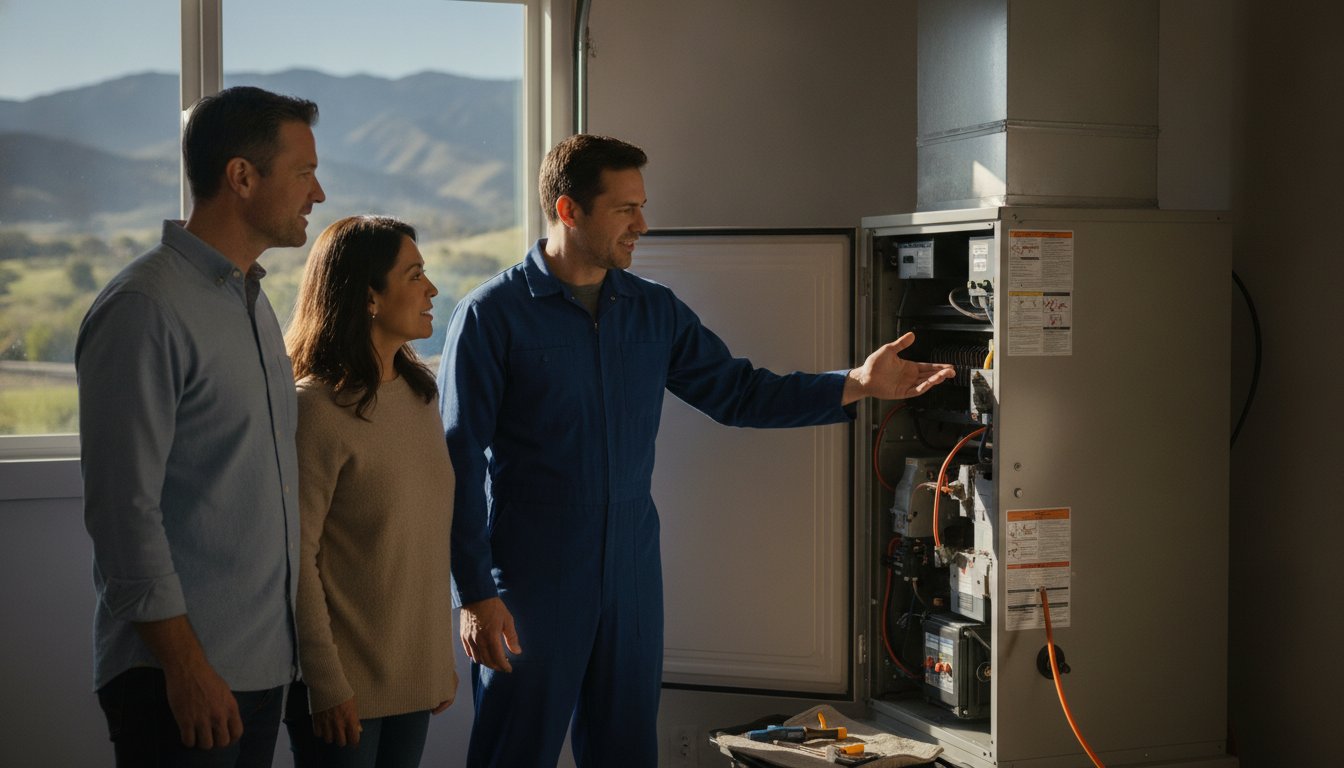
A professional service call shouldn't be a mystery. When you schedule a furnace repair Yucaipa residents can expect a structured, methodical process designed to identify the root cause of the failure while ensuring the system remains safe for operation. The technician begins by verifying the basics that you checked during your DIY troubleshooting, such as thermostat responsiveness and proper power supply. From there, they move into a detailed inspection of the ignition sequence and safety controls to ensure every component is communicating correctly.
Once the electrical and control systems are verified, the focus shifts to the mechanical heart of the unit. The technician cleans and inspects the burner assembly to ensure a clean, efficient flame. They also perform a meticulous check of the heat exchanger for any signs of physical stress or microscopic fractures. The blower motor is inspected for proper amperage draw, and any moving parts are lubricated if the manufacturer’s specifications require it. This thoroughness prevents the friction that leads to premature motor failure and loud operational noises.
The final phase of the visit is the most critical: the safety test. After the repair is complete, the technician monitors the system for potential gas leaks using electronic detectors and measures carbon monoxide levels in the exhaust stream. This ensures that the air being circulated through your home is not only warm but entirely safe for your family to breathe. This disciplined approach to service provides a clear baseline for your system's health moving forward.
Comprehensive Diagnostic Steps
Finding a problem requires more than just a visual check. Modern technicians use specialized tools like infrared cameras or electronic combustion analyzers to find hidden cracks in a heat exchanger that the naked eye might miss. They also verify proper venting and airflow throughout the home to ensure the system isn't struggling due to ductwork issues common in older properties. A manometer is a precision instrument used to measure the gas pressure entering and leaving the gas valve, ensuring the furnace is firing at the exact intensity intended by the manufacturer. These technical steps are standard during a high-quality furnace repair Yucaipa visit.
Post-Repair Communication
Transparency doesn't end when the tools are packed away. You should receive a detailed report of the findings and a clear explanation of the work performed. A professional service provider will also outline the warranty on parts and labor for your peace of mind. To ensure your furnace lasts through the season, the technician will provide guidance on maintaining the specific repair, such as monitoring a specific sensor or sticking to a strict filter schedule. If you're ready for a thorough inspection, you can schedule your furnace diagnostic call today to get your system back in peak condition.
Preventing Future Furnace Failures in Yucaipa
Proactive maintenance is the most effective way to avoid the stress of an emergency furnace repair Yucaipa service call. While mechanical parts naturally wear out over time, many common failures are accelerated by environmental factors and simple neglect. Taking a few disciplined steps each year ensures your system operates at peak efficiency while extending the life of your equipment. A well-maintained furnace doesn't just run better; it runs more safely for everyone in your household.
The 90-day filter rule is your first line of defense. While standard industry advice often suggests changing filters every six months, Yucaipa's unique geography demands a stricter schedule. The fine dust carried by local foothill winds can saturate a standard pleated filter much faster than in other regions. A clogged filter restricts airflow, which forces the blower motor to work harder and can cause the heat exchanger to overheat. Replacing your filter every three months is a low-cost habit that prevents high-cost repairs. Additionally, ensure the area around your furnace is completely clear. Storing household items too close to the unit can restrict the combustion air needed for a clean, safe burn.
Beyond specialized heating maintenance, keeping your utility spaces organized and your property in good repair is vital for home safety. You can discover more about Residential and Commercial Handyman Services to find professional support for a variety of residential and commercial upkeep projects.
Efficiency also depends on how you manage your home's temperature. Investing in a programmable thermostat reduces unnecessary system strain by avoiding extreme temperature swings. Instead of forcing the furnace to "recover" from a 10-degree drop when you return home, a programmed schedule keeps the system running in shorter, more manageable cycles. This consistency preserves the integrity of the ignition system and the blower motor bearings over the long term.
Seasonal Maintenance Tasks
A professional cleaning is significantly more effective than a simple vacuum job. During a scheduled tune-up, a technician uses specialized tools to clean the internal burner assembly and the blower wheel, areas that are inaccessible to most homeowners. They also inspect the ductwork for leaks. Even small gaps in your ducts can force the furnace to work significantly harder to maintain your comfort, leading to premature wear. As you prepare for the Yucaipa summer shutdown, ensure your system is inspected for any moisture buildup that could cause internal corrosion during the months the furnace sits idle.
Long-Term System Health
Recognizing when a repair is no longer cost-effective is a key part of responsible homeownership. We suggest following the "50% Rule" for older units. If a single repair cost exceeds 50% of the value of a new system, or if the unit requires frequent visits to stay operational, a high-efficiency HVAC installation is often the more ethical and economical choice. Modern systems provide better indoor air quality and lower monthly utility costs than the aging units common in older Inland Empire homes. If you are concerned about the reliability of your heating system, Contact Air Services Mechanical for a reliable furnace diagnostic today to receive a straightforward, professional assessment.
Securing Reliable Warmth for Your Yucaipa Home
Maintaining a functional heating system is a matter of consistent attention rather than guesswork. By following the diagnostic checklist and staying ahead of local maintenance needs, you can protect your home from the stress of a mid-winter failure. Whether you're addressing a minor noise or a significant performance drop, choosing a qualified professional for furnace repair Yucaipa ensures the job is done right the first time. For homeowners in the broader region, HVAC Inspections Los Angeles offers professional diagnosis and solutions for residential properties. It's about more than just mechanical fixes; it's about the safety and long-term comfort of your family.
Air Services Mechanical brings over 20 years of local experience to every service call. Our NATE-certified and EPA-certified technicians focus on transparent diagnostics and ethical recommendations, providing you with the peace of mind that comes from honest workmanship. We prioritize long-term results over quick fixes, and our 24/7 emergency service is always ready to assist when you need us most. You don't have to navigate heating issues alone when you have a dependable local expert by your side.
Schedule Your Professional Furnace Repair with Air Services Mechanical today to ensure your system is safe, efficient, and ready for the season. We look forward to helping you maintain a warm and comfortable home for years to come.
Frequently Asked Questions
How much does furnace repair in Yucaipa typically cost?
Most typical furnace repairs in Southern California range from $150 to $800. Minor tasks like replacing a thermostat or air filter usually fall between $200 and $300, while intermediate repairs such as blower motors or ignitors can cost between $300 and $1,000. Major issues like a cracked heat exchanger may exceed $1,000. A standard diagnostic fee for a furnace inspection in our area is approximately $119.
What should I do if I smell gas near my furnace?
You should immediately evacuate your home and call your gas provider or emergency services from a safe distance. Do not operate any electrical switches, light matches, or use your phone inside the house, as these can trigger an explosion. Once the area is secured by professionals, you can contact a technician for furnace repair Yucaipa to identify the source of the leak and perform the necessary mechanical repairs.
Why is my furnace blowing cold air even when the heat is on?
Cold air is often caused by a faulty pilot light, a failed ignition system, or a tripped limit switch. If the furnace overheats due to a lack of airflow, the limit switch will shut off the burners while keeping the blower fan running to cool the system down. You should also check your thermostat settings to ensure the fan isn't set to "On" instead of "Auto," which causes the fan to blow even when the burners are off.
How long does a standard furnace repair call take?
Most standard repair visits are completed within one to three hours. This timeframe includes the initial diagnostic, the actual repair work, and the final safety testing for carbon monoxide and gas leaks. More complex issues, such as replacing a blower motor or a heat exchanger, may take longer depending on part availability. A professional technician will always provide a clear estimate of the required time after their initial inspection is complete.
Is it worth repairing a 15-year-old furnace?
Repairing a 15-year-old unit is often less cost-effective than replacement due to the system's age and lower efficiency. Furnaces typically have a 15 to 20-year lifespan, and older models often fall below the current 2026 California minimum efficiency standard of 81% AFUE. If the repair costs exceed half the value of a new unit, or if the system uses obsolete components, investing in a high-efficiency replacement is usually the more reliable long-term choice.
What are the most common furnace problems in Yucaipa?
Ignition failure and airflow restrictions are the most frequent issues reported by local homeowners. Dust from our foothill environment often clogs filters and sensors, leading to system shutdowns or short-cycling. Worn-out blower motors and faulty thermocouples are also common in older Inland Empire homes. Regular maintenance helps catch these specific issues before they turn into complete system failures during the coldest winter nights.
Can a dirty air filter really stop my furnace from working?
Yes, a heavily soiled air filter can trigger a complete system shutdown. When airflow is restricted, the internal temperature of the furnace rises rapidly, causing the high-limit safety switch to trip and kill the burners. This is a protective measure to prevent the heat exchanger from cracking. Frequently changing your filter is the simplest way to avoid an unnecessary furnace repair Yucaipa service call and maintain your system's efficiency.
Do I need a permit for a furnace repair in San Bernardino County?
You don't need a permit for simple repairs such as replacing a motor, capacitor, or sensor. However, a permit from the local building department is mandatory for a full furnace replacement or change-out. This process includes HERS testing to ensure the new installation complies with current California energy codes. Always verify with your contractor that they are following local regulatory requirements for any major equipment changes in Yucaipa.


