

The mildest season isn’t always the safest time to wait. If your system is showing signs of trouble, delaying replacement until spring or fall could leave you without reliable heating or cooling when you need it most. The best time of year to replace HVAC system in California depends on more than the calendar: your system’s condition, local weather, and installation scheduling all matter.
Spring and fall can be convenient times to plan, but they are not automatically the right choice for every home. Consider how reliably your system heats and cools, how comfortable your household would be during a temporary interruption, and whether you have time to compare options. This guide compares replacement planning by season and shares practical steps for getting an assessment. For Redlands homeowners, local heat and your household’s cooling needs should be part of the decision.
Key Takeaways
- The best time of year to replace HVAC system in California depends on your local climate and system condition, not one statewide season.
- Compare spring, summer, fall, and winter based on household comfort, urgency, and time to plan.
- Peak heat or cold can make an equipment outage harder to manage, so take persistent system problems seriously.
- Document issues, arrange a professional assessment, and discuss your home’s comfort needs before planning installation.
When Is the Best Time of Year to Replace an HVAC System in California?
Spring and fall can be practical times to plan HVAC replacement because temperatures are often milder, but the system’s condition and local scheduling matter more than the season. The best time of year to replace HVAC system in California varies by region: coastal areas, inland communities, desert locations, and mountain towns can have different heating and cooling demands.
A shoulder season is the transition between the main heating and cooling periods, generally spring or fall. Homeowners may prefer these windows because moderate outdoor temperatures can make it easier to manage a temporary disruption. For background on system terminology and types, see Heating, ventilation, and air conditioning (HVAC).
This video also discusses replacement timing:
Why spring and fall can be practical planning windows
In Redlands and the Inland Empire, hot summer weather can make a cooling-system outage especially uncomfortable, while cooler winter periods can increase the need for reliable heating. A milder stretch may give your household more flexibility to prepare rooms, arrange access, and discuss installation plans before peak demand. These are possible conveniences, not guarantees of faster scheduling or lower prices.
Use the season as a planning opportunity, not a reason to delay a needed decision. If the system is repeatedly failing, struggling to maintain comfortable temperatures, or operating unusually, arrange a professional assessment promptly. Share what you have noticed and when it occurs. A qualified contractor can consider the existing equipment, property conditions, and your comfort needs to help you understand whether repair, maintenance, or replacement is appropriate.
Compare California HVAC Replacement Timing by Season
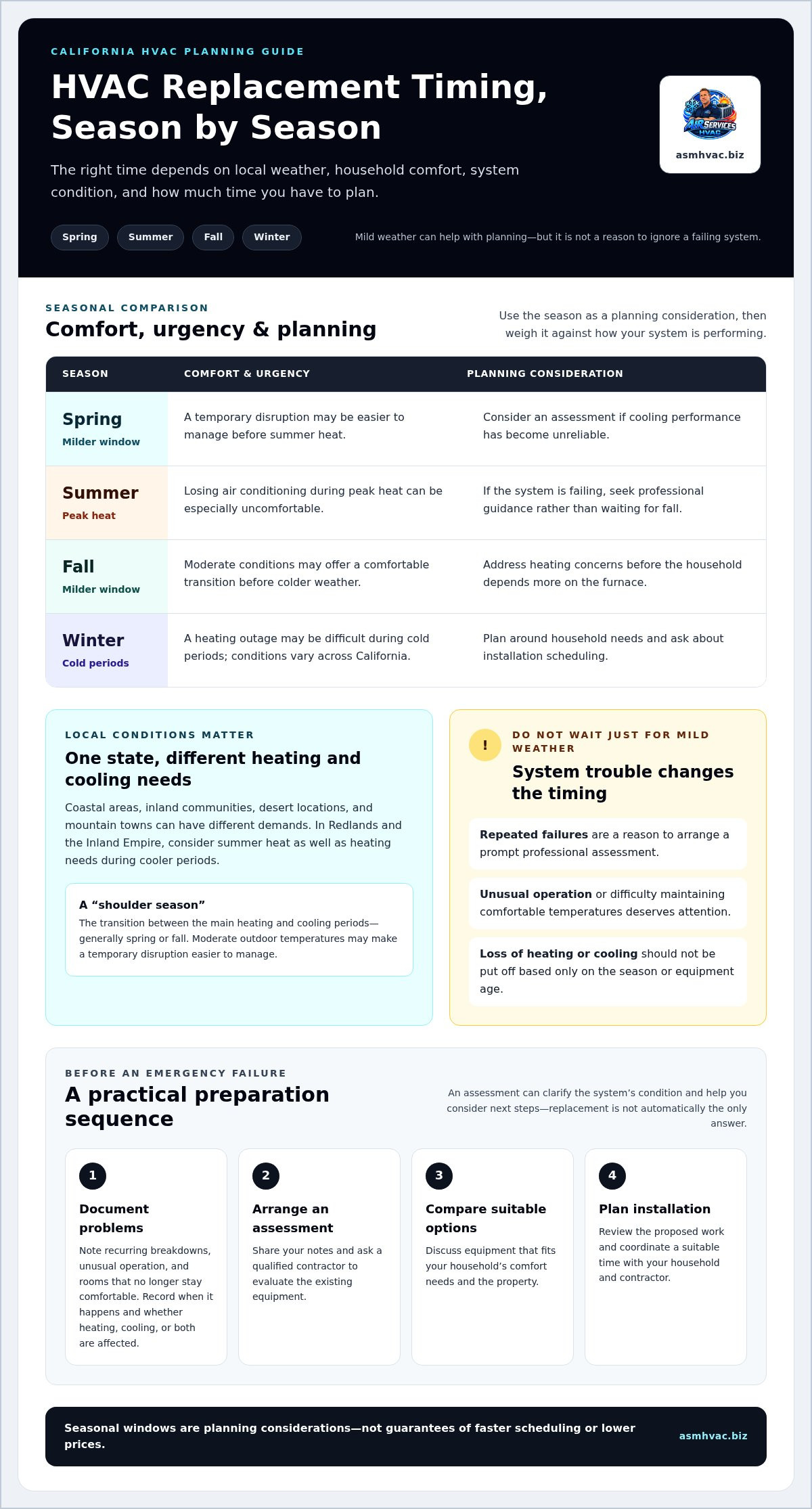
Each season presents a different balance of comfort and urgency. The best time of year to replace HVAC system in California depends on how disruptive an outage would be at your home and how much time you have to plan. Use the comparison below as a starting point, then weigh it against how your system is performing.
| Season | Comfort and urgency | Planning consideration |
|---|---|---|
| Spring | Milder weather may make a temporary disruption easier to manage before summer heat. | Consider an assessment if cooling performance has become unreliable. |
| Summer | Peak heat can make losing air conditioning especially uncomfortable. | If the system is failing, seek professional guidance rather than waiting for fall. |
| Fall | Moderate conditions may offer a comfortable transition before colder weather. | Address heating concerns before the household depends more on the furnace. |
| Winter | A heating outage may be difficult during cold periods, though conditions vary across California. | Plan around household needs and ask about installation scheduling. |
These are general planning considerations, not promises about contractor availability or seasonal pricing. California’s varied climates matter: a home’s heating and cooling needs differ by location. In Redlands, consider how your household manages summer heat as well as its heating needs during cooler periods. Also think through which rooms need to stay comfortable and whether you have another way to manage if the system is temporarily unavailable.
When waiting for mild weather may not be the right choice
Seasonal convenience cannot outweigh signs that an HVAC system is unreliable. Repeated failures, unusual operation, or a loss of heating or cooling are reasons to arrange a prompt professional assessment, regardless of the time of year. Don’t decide to wait based only on equipment age or the season. An assessment can help clarify the system’s condition and the options to consider.
If replacement is being considered, discuss equipment selection, your comfort needs, and property conditions with a qualified contractor. Bring a concise record of recurring problems, including which rooms are affected and when the issue occurs. This guide to energy-efficient HVAC installation can help you prepare questions. A professional HVAC installation assessment can help you plan a practical next step.
Plan an HVAC Replacement in California Before Your System Fails
A timely assessment gives you more planning options than an emergency failure. If your system has started behaving differently, write down what you notice and arrange a professional evaluation before peak heating or cooling demand, if circumstances allow. This can help you understand the system’s condition and consider next steps without assuming replacement is the only answer.
Use a simple sequence to prepare:
- Document problems: Note recurring breakdowns, unusual operation, and rooms that no longer stay comfortable. Record when the issue happens and whether it affects heating, cooling, or both.
- Arrange an assessment: Share your notes and ask a qualified contractor to evaluate the existing equipment.
- Compare suitable options: Discuss systems that fit your household’s comfort needs and the property.
- Plan installation: Review the proposed work and coordinate a suitable time with your household and contractor.
What to discuss during a replacement assessment
Ask about the system’s condition, appropriate equipment options, the installation scope, and any requirements specific to your property. Explain how your household uses heating and cooling, which rooms are difficult to keep comfortable, and what you know about the existing equipment. Confirm what the proposed work includes and ask how the installation could affect your home’s heating or cooling while work is underway. Verify any current code, incentive, or other requirements that may apply rather than relying on assumptions.
If the assessment suggests the system may not need replacement yet, preventative HVAC maintenance guidance can help you explore care options. If installation is appropriate, a professional HVAC installation assessment is a practical next step in planning the work.
Make a Confident Plan for Your HVAC Replacement
The best time of year to replace HVAC system in California depends on your system’s condition, your local weather, and how comfortably your household can manage installation. Spring and fall may offer practical planning windows, but repeated failures or unreliable heating and cooling deserve attention in any season. A professional assessment can help you understand whether replacement is appropriate and compare options before a breakdown forces a rushed decision.
Air Services Mechanical is a licensed, bonded, and insured HVAC contractor based in Redlands, with over 20 years of industry experience. Its NATE-certified and EPA-certified technicians provide HVAC services, including installation and repair, and 24/7 emergency service for urgent heating and cooling needs. For a clear next step, schedule an HVAC assessment with Air Services Mechanical.
With a timely evaluation and a plan suited to your home, you can approach your next installation with greater confidence and fewer surprises.
Frequently Asked Questions
What is the best month to replace an HVAC system in California?
There isn’t one best month for every California home. The best time of year to replace HVAC system in California depends on local weather, your system’s condition, and contractor scheduling. Spring and fall can be convenient planning windows, but if equipment is unreliable, arrange an assessment rather than waiting for a particular month.
Is it better to replace an HVAC system in spring or fall?
Neither season is universally better. Spring may give you time to address cooling concerns before warmer weather, while fall can be a useful window to assess heating needs before cooler periods. In Redlands, consider your household’s comfort needs and the system’s recent performance, then discuss timing and installation plans with a qualified contractor.
Should I replace my HVAC system before it stops working?
Consider a professional assessment before a complete breakdown if the system has repeated failures, unusual operation, or trouble maintaining comfortable temperatures. An assessment can help clarify whether repair, maintenance, or replacement is appropriate. Don’t make the decision based on age alone, and don’t wait for mild weather if heating or cooling has stopped working.
Does the best time to replace an HVAC system vary across California?
Yes. California’s coastal, inland, desert, and mountain areas can have different weather patterns and heating or cooling demands. A homeowner in Redlands may plan around local heat and household cooling needs, while another region may prioritize heating. Consider the conditions at your property, your system’s reliability, and installation scheduling rather than applying one statewide calendar rule.


